AI Chat Zero Filter

AI Chat Zero Filter — independent reviews, comparisons, pricing and step-by-step guides on Aizhi.

  • ZygoteBody

    ZygoteBody

    ZygoteBody, formerly Google Body, is a web application by Zygote Media Group that renders manipulable 3D anatomical models of the human body. Several layers, from muscle tissues down to blood vessels, can be removed or made transparent to allow better study of individual body parts. Most of the body parts are labelled and are searchable. == Technology == The human models are based on data from the Zygote Media Group. The website uses JavaScript and WebGL technology to display 3D images inside the web browser without requiring the installation of external browser plug-ins. == History == ZygoteBody was launched as Google Body on December 15, 2010. On April Fools' Day 2011, users were greeted with the anatomy of a cow on the home page. The cow model is still available as part of the open-3d-viewer open source project. As part of the wind down on Google Labs, it was announced that Google Body will be shut down but will continue to be maintained by Zygote as ZygoteBody. On October 13, 2011, the Google Body site was shut down. Then, on January 9, 2012, ZygoteBody was launched and core code base (with the Google Cow model as a demo) was made available as an open source project called open-3d-viewer.

    Read more →
  • Daisy Intelligence

    Daisy Intelligence

    Daisy Intelligence is a Canadian artificial intelligence (AI) company that provides data analysis services to help retailers, mainly grocers and supermarkets, to determine optimal pricing and promotional mix. The company also helps insurance companies detect fraudulent claims. The company uses a subset of AI known as reinforcement learning. In October 2019, the company moved from the suburban Vaughan, Ontario, to downtown Toronto, joining other AI and technology startups concentrated in the King Street East area. In 2019, the company was ranked No. 39 on The Globe and Mail's annual list of Canada's "top growing companies by three-year revenue growth."

    Read more →
  • Richard S. Sutton

    Richard S. Sutton

    Richard Stuart Sutton (born 1957 or 1958) is a Canadian computer scientist. He is a professor of computing science at the University of Alberta, fellow & Chief Scientific Advisor at the Alberta Machine Intelligence Institute, and a research scientist at Keen Technologies. Sutton is considered one of the founders of modern computational reinforcement learning. In particular, he contributed to temporal difference learning and policy gradient methods. He received the 2024 Turing Award with Andrew Barto. == Education and early life == Richard Sutton was born in either 1957 or 1958 in Toledo, Ohio, and grew up in Oak Brook, Illinois, a suburb of Chicago, United States. Sutton received his Bachelor of Arts (BA) degree in psychology from Stanford University in 1978 before taking a Master of Science (1980) and PhD (1984) in computer science from the University of Massachusetts Amherst supervised by Andrew Barto. His doctoral dissertation introduced actor-critic architectures and temporal credit assignment. He was influenced by Harry Klopf's work in the 1970s, which proposed that supervised learning is insufficient for AI or explaining intelligent behavior, and trial-and-error learning, driven by "hedonic aspects of behavior", is necessary. This focused his interest to reinforcement learning. == Career and research == Sutton held a postdoctoral research position at the University of Massachusetts Amherst in 1984. He worked at GTE Laboratories in Waltham, Massachusetts as principal member of technical staff from 1985 to 1994, then returned to the University of Massachusetts Amherst as a senior research scientist. He joined AT&T Labs Shannon Laboratory in Florham Park, New Jersey as principal technical staff member from 1998 to 2002. He has been a professor of computing science at the University of Alberta since 2003, where he helped establish the Reinforcement Learning and Artificial Intelligence Laboratory. In 2017 he became a distinguished research scientist with Google DeepMind and helped launch DeepMind Alberta in Edmonton, a research office operated in close collaboration with the University of Alberta. 1984: Postdoctoral researcher, University of Massachusetts Amherst (Amherst, Massachusetts) 1985–1994: Principal member of technical staff, Computer and Intelligent Systems Laboratory, GTE Laboratories (Waltham, Massachusetts) 1995–1998: Senior research scientist, University of Massachusetts Amherst (Amherst, Massachusetts) 1998–2002: Principal technical staff member, Artificial Intelligence Department, AT&T Labs Shannon Laboratory (Florham Park, New Jersey) 2003–present: Professor of computing science, University of Alberta (Edmonton, Alberta) 2017–2023: Distinguished research scientist, DeepMind Alberta, Google DeepMind (Edmonton, Alberta) 2024–Present: Research scientist, Keen Technologies === Reinforcement learning === Sutton joined Andrew Barto in the early 1980s at UMass, trying to explore the behavior of neurons in the human brain as the basis for human intelligence, a concept that had been advanced by computer scientist A. Harry Klopf. Sutton and Barto used mathematics toward furthering the concept and using it as the basis for artificial intelligence. This concept became known as reinforcement learning and went on to becoming a key part of artificial intelligence techniques. Barto and Sutton used Markov decision processes (MDP) as the mathematical foundation to explain how agents (algorithmic entities) made decisions when in a stochastic or random environment, receiving rewards at the end of every action. Traditional MDP theory assumed the agents knew all information about the MDPs in their attempt toward maximizing their cumulative rewards. Barto and Sutton's reinforcement learning techniques allowed for both the environment and the rewards to be unknown, and thus allowed for these category of algorithms to be applied to a wide array of problems. Sutton returned to Canada in the 2000s and continued working on the topic which continued to develop in academic circles until one of its first major real world applications saw Google's AlphaGo program built on this concept defeating the then prevailing human champion. Barto and Sutton have widely been credited and accepted as pioneers of modern reinforcement learning, with the technique itself being foundational to the AI boom. In a 2019 essay, Sutton proposed the "bitter lesson", which criticized the field of AI research for failing to learn that "building in how we think we think does not work in the long run", arguing that "70 years of AI research [had shown] that general methods that leverage computation are ultimately the most effective, and by a large margin", beating efforts building on human knowledge about specific fields like computer vision, speech recognition, chess or Go. Sutton argues that large language models aren’t capable of learning on-the-job, and so new model architectures are required to enable continual learning. Sutton further argues that a special training phase will be unnecessary — the agent will learn on-the-fly, rendering large language models obsolete. In 2023, Sutton and John Carmack announced a partnership for the development of artificial general intelligence (AGI). === Awards and honors === Sutton has been a Fellow of the Association for the Advancement of Artificial Intelligence (AAAI) since 2001; his nomination read: "For significant contributions to many topics in machine learning, including reinforcement learning, temporal difference techniques, and neural networks." In 2003, he received the President's Award from the International Neural Network Society and in 2013, the Outstanding Achievement in Research award from the University of Massachusetts Amherst. He received the 2024 Turing Award from the Association for Computing Machinery together with Andrew Barto; the citation of the award read: "For developing the conceptual and algorithmic foundations of reinforcement learning." In 2016, Sutton was elected Fellow of the Royal Society of Canada. In 2021, he was elected Fellow of the Royal Society (FRS) of London. === Research === Sutton introduced temporal-difference methods for prediction and control, establishing convergence properties and practical algorithms. He proposed integrated learning and planning through the Dyna architecture. He co-developed the options framework for temporal abstraction in reinforcement learning. He co-authored the first modern policy gradient formulation with function approximation. Sutton's essay The Bitter Lesson argued that general methods that scale with computation dominate domain-specific approaches in the long run. His former doctoral students include David Silver and Doina Precup. === Selected publications === His publications include: == Personal life == Sutton became a Canadian citizen in 2015, and his renunciation of US citizenship was reported in 2017.

    Read more →
  • Guideline execution engine

    Guideline execution engine

    A guideline execution engine is a computer program which can interpret a clinical guideline represented in a computerized format and perform actions towards the user of an electronic medical record. A guideline execution engine needs to communicate with a host clinical information system. Virtual Medical Record (vMR) is one possible interface which can be used. The engine's main function is to manage instances of executed guidelines of individual patients. == Architecture == The following modules are generally needed for any engine: interface to clinical information system new guidelines loading module guideline interpreter module clinical events parser alert/recommendations dispatch == Guideline Interchange Format == The Guideline Interchange Format (GLIF) is a computer representation format for clinical guidelines. Represented guidelines can be executed using a guideline execution engine. The format has several versions as it has been improved. In 2003 GLIF3 was introduced. == Use of third party workflow engine as a guideline execution engine == Some commercial electronic health record systems use a workflow engine to execute clinical guidelines. RetroGuide and HealthFlow are examples of such an approach.

    Read more →
  • Ray tracing (graphics)

    Ray tracing (graphics)

    In 3D computer graphics, ray tracing is a technique for modeling light transport for use in a wide variety of rendering algorithms for generating digital images. On a spectrum of computational cost and visual fidelity, ray tracing-based rendering techniques, such as ray casting, recursive ray tracing, distribution ray tracing, photon mapping and path tracing, are generally slower and higher fidelity than scanline rendering methods. Thus, ray tracing was first deployed in applications where taking a relatively long time to render could be tolerated, such as still CGI images, and film and television visual effects (VFX), but was less suited to real-time applications such as video games, where speed is critical in rendering each frame. Since 2018, however, hardware acceleration for real-time ray tracing has become standard on new commercial graphics cards, and graphics APIs have followed suit, allowing developers to use hybrid ray tracing and rasterization-based rendering in games and other real-time applications with a lesser hit to frame render times. Ray tracing is capable of simulating a variety of optical effects, such as reflection, refraction, soft shadows, scattering, depth of field, motion blur, caustics, ambient occlusion and dispersion phenomena (such as chromatic aberration). It can also be used to trace the path of sound waves in a similar fashion to light waves, making it a viable option for more immersive sound design in video games by rendering realistic reverberation and echoes. In fact, any physical wave or particle phenomenon with approximately linear motion can be simulated with ray tracing. Ray tracing–based rendering techniques that sample light over a domain typically generate multiple rays and often rely on denoising to reduce the resulting noise. == History == The idea of ray tracing comes from as early as the 16th century, when it was described by Albrecht Dürer, who is credited for its invention. Dürer described multiple techniques for projecting 3-D scenes onto an image plane. Some of these project chosen geometry onto the image plane, as is done with rasterization today. Others determine what geometry is visible along a given ray, as is done with ray tracing. Using a computer for ray tracing to generate shaded pictures was first accomplished by Arthur Appel in 1968. Appel used ray tracing for primary visibility (determining the closest surface to the camera at each image point) by tracing a ray through each point to be shaded into the scene to identify the visible surface. The closest surface intersected by the ray was the visible one. This non-recursive ray tracing-based rendering algorithm is today called "ray casting". His algorithm then traced secondary rays to the light source from each point being shaded to determine whether the point was in shadow or not. Later, in 1971, Goldstein and Nagel of MAGI (Mathematical Applications Group, Inc.) published "3-D Visual Simulation", wherein ray tracing was used to make shaded pictures of solids. At the ray-surface intersection point found, they computed the surface normal and, knowing the position of the light source, computed the brightness of the pixel on the screen. Their publication describes a short (30-second) film "made using the University of Maryland's display hardware outfitted with a 16mm camera. The film showed the helicopter and a simple ground-level gun emplacement. The helicopter was programmed to undergo a series of maneuvers including turns, take-offs, and landings, etc., until it eventually is shot down and crashed." A CDC 6600 computer was used. MAGI produced an animation video called MAGI/SynthaVision Sampler in 1974. Another early instance of ray casting came in 1976, when Scott Roth created a flip book animation in Bob Sproull's computer graphics course at Caltech. The scanned pages are shown as a video in the accompanying image. Roth's computer program noted an edge point at a pixel location if the ray intersected a bounded plane different from that of its neighbors. Of course, a ray could intersect multiple planes in space, but only the surface point closest to the camera was noted as visible. The platform was a DEC PDP-10, a Tektronix storage-tube display, and a printer which would create an image of the display on rolling thermal paper. Roth extended the framework, introduced the term ray casting in the context of computer graphics and solid modeling, and in 1982 published his work while at GM Research Labs. Turner Whitted was the first to show recursive ray tracing for mirror reflection and for refraction through translucent objects, with an angle determined by the solid's index of refraction, and to use ray tracing for anti-aliasing. Whitted also showed ray traced shadows. He produced a recursive ray traced film called The Compleat Angler in 1979 while an engineer at Bell Labs. Whitted's deeply recursive ray tracing algorithm reframed rendering from being primarily a matter of surface visibility determination to being a matter of light transport. His paper inspired a series of subsequent work by others that included distribution ray tracing and finally unbiased path tracing, which provides the rendering equation framework that has allowed computer-generated imagery to be faithful to reality. For decades, global illumination in major films using computer-generated imagery was approximated with additional lights. Ray tracing-based rendering eventually changed that by enabling physically based light transport. Early feature films rendered entirely using path tracing include Monster House (2006), Cloudy with a Chance of Meatballs (2009), and Monsters University (2013). == Algorithm overview == Optical ray tracing describes a method for producing visual images constructed in 3D computer graphics environments, with more photorealism than either ray casting or scanline rendering techniques. It works by tracing a path from an imaginary eye through each pixel in a virtual screen, and calculating the color of the object visible through it. Scenes in ray tracing are described mathematically by a programmer or by a visual artist (normally using intermediary tools). Scenes may also incorporate data from images and models captured by means such as digital photography. Typically, each ray must be tested for intersection with some subset of all the objects in the scene. Once the nearest object has been identified, the algorithm will estimate the incoming light at the point of intersection, examine the material properties of the object, and combine this information to calculate the final color of the pixel. Certain illumination algorithms and reflective or translucent materials may require more rays to be re-cast into the scene. It may at first seem counterintuitive or "backward" to send rays away from the camera, rather than into it (as actual light does in reality), but doing so is many orders of magnitude more efficient. Since the overwhelming majority of light rays from a given light source do not make it directly into the viewer's eye, a "forward" simulation could potentially waste a tremendous amount of computation on light paths that are never recorded. Therefore, the shortcut taken in ray tracing is to presuppose that a given ray intersects the view frame. After either a maximum number of reflections or a ray traveling a certain distance without intersection, the ray ceases to travel and the pixel's value is updated. === Calculate rays for rectangular viewport === On input we have (in calculation we use vector normalization and cross product): E ∈ R 3 {\displaystyle E\in \mathbb {R^{3}} } eye position T ∈ R 3 {\displaystyle T\in \mathbb {R^{3}} } target position θ ∈ [ 0 , π ] {\displaystyle \theta \in [0,\pi ]} field of view - for humans, we can assume ≈ π / 2 rad = 90 ∘ {\displaystyle \approx \pi /2{\text{ rad}}=90^{\circ }} m , k ∈ N {\displaystyle m,k\in \mathbb {N} } numbers of square pixels on viewport vertical and horizontal direction i , j ∈ N , 1 ≤ i ≤ k ∧ 1 ≤ j ≤ m {\displaystyle i,j\in \mathbb {N} ,1\leq i\leq k\land 1\leq j\leq m} numbers of actual pixel v → ∈ R 3 {\displaystyle {\vec {v}}\in \mathbb {R^{3}} } vertical vector which indicates where is up and down, usually v → = [ 0 , 1 , 0 ] {\displaystyle {\vec {v}}=[0,1,0]} - roll component which determine viewport rotation around point C (where the axis of rotation is the ET section) The idea is to find the position of each viewport pixel center P i j {\displaystyle P_{ij}} which allows us to find the line going from eye E {\displaystyle E} through that pixel and finally get the ray described by point E {\displaystyle E} and vector R → i j = P i j − E {\displaystyle {\vec {R}}_{ij}=P_{ij}-E} (or its normalization r → i j {\displaystyle {\vec {r}}_{ij}} ). First we need to find the coordinates of the bottom left viewport pixel P 1 m {\displaystyle P_{1m}} and find the next pixel by making a shift along directions parallel to viewport (vectors b → n {\displaystyle {\vec {b}}_{n

    Read more →
  • Thinking Machines Lab

    Thinking Machines Lab

    Thinking Machines Lab Inc. is an American artificial intelligence (AI) startup founded by Mira Murati, the former chief technology officer of OpenAI. The company was founded in February 2025, and by July had completed an early-stage funding round led by Andreessen Horowitz, raising $2 billion at a valuation of $12 billion overall from investors such as Nvidia, AMD, Cisco, and Jane Street. The company is based in San Francisco and structured as a public benefit corporation. == History == By its launch in February 2025, Thinking Machines Lab was reported to have hired about 30 researchers and engineers from competitors including OpenAI, Meta AI, and Mistral AI. Its founding team members include Barret Zoph, former OpenAI VP of Research (Post-Training), Lilian Weng, former OpenAI VP, and OpenAI cofounder John Schulman, who joined after a brief stint at the lab's competitor Anthropic. In January 2026, it was reported that Barret Zoph and Luke Metz, departed the startup to return to OpenAI. Other former OpenAI employees who have been hired include Jonathan Lachman and Andrew Tulloch (although Tulloch departed after getting recruited for Meta Superintelligence Labs). Thinking Machines Lab's advisers include Bob McGrew, previously OpenAI's chief research officer, and Alec Radford, who was a lead researcher for OpenAI. On October 1, 2025, it announced Tinker, an API for fine-tuning language models. Users would submit jobs through the API for fine-tuning one of the various open-weight models supported. The Lab would run the jobs on its internal clusters and training infrastructure. == Business structure == Thinking Machines Lab grants Mira Murati a deciding vote on board matters, weighted to provide her with a majority decision-making capability. Additionally, founding shareholders possess votes weighted 100 times greater than those of regular shareholders. In July 2025, Andreessen Horowitz was reported to have led the company's initial funding round, raising "about $2 billion at a valuation of $12 billion". The government of Albania (Murati's country of origin) was also included in this round, making a $10 million investment which required an amendment to the country's 2025 budget. == Partnership == In March 2026, Thinking Machines Lab announced a strategic partnership with NVIDIA involving an undisclosed investment and a multi-year agreement to deploy one gigawatt of Vera Rubin computing capacity.

    Read more →
  • Tree (abstract data type)

    Tree (abstract data type)

    In computer science, a tree is a widely used abstract data type that represents a hierarchical tree structure with a set of connected nodes. Each node in the tree can be connected to many children (depending on the type of tree), but must be connected to exactly one parent, except for the root node, which has no parent (i.e., the root node as the top-most node in the tree hierarchy). These constraints mean there are no cycles or "loops" (no node can be its own ancestor), and also that each child can be treated like the root node of its own subtree, making recursion a useful technique for tree traversal. In contrast to linear data structures, many trees cannot be represented by relationships between neighboring nodes (parent and children nodes of a node under consideration, if they exist) in a single straight line (called edge or link between two adjacent nodes). Binary trees are a commonly used type, which constrain the number of children for each parent to at most two. When the order of the children is specified, this data structure corresponds to an ordered tree in graph theory. A value or pointer to other data may be associated with every node in the tree, or sometimes only with the leaf nodes, which have no children nodes. The abstract data type (ADT) can be represented in a number of ways, including a list of parents with pointers to children, a list of children with pointers to parents, or a list of nodes and a separate list of parent-child relations (a specific type of adjacency list). Representations might also be more complicated, for example using indexes or ancestor lists for performance. Trees as used in computing are similar to but can be different from mathematical constructs of trees in graph theory, trees in set theory, and trees in descriptive set theory. == Terminology == A node is a structure which may contain data and connections to other nodes, sometimes called edges or links. Each node in a tree has zero or more child nodes, which are below it in the tree (by convention, trees are drawn with descendants going downwards). A node that has a child is called the child's parent node (or superior). All nodes have exactly one parent, except the topmost root node, which has none. A node might have many ancestor nodes, such as the parent's parent. Child nodes with the same parent are sibling nodes. Typically siblings have an order, with the first one conventionally drawn on the left. Some definitions allow a tree to have no nodes at all, in which case it is called empty. An internal node (also known as an inner node, inode for short, or branch node) is any node of a tree that has child nodes. Similarly, an external node (also known as an outer node, leaf node, or terminal node) is any node that does not have child nodes. The height of a node is the length of the longest downward path to a leaf from that node. The height of the root is the height of the tree. The depth of a node is the length of the path to its root (i.e., its root path). Thus the root node has depth zero, leaf nodes have height zero, and a tree with only a single node (hence both a root and leaf) has depth and height zero. Conventionally, an empty tree (tree with no nodes, if such are allowed) has height −1. Each non-root node can be treated as the root node of its own subtree, which includes that node and all its descendants. Other terms used with trees: Neighbor Parent or child. Ancestor A node reachable by repeated proceeding from child to parent. Descendant A node reachable by repeated proceeding from parent to child. Also known as subchild. Degree For a given node, its number of children. A leaf, by definition, has degree zero. Degree of tree The degree of a tree is the maximum degree of a node in the tree. Distance The number of edges along the shortest path between two nodes. Level The level of a node is the number of edges along the unique path between it and the root node. This is the same as depth. Width The number of nodes in a level. Breadth The number of leaves. Complete tree A tree with every level filled, except the last. Forest A set of one or more disjoint trees. Ordered tree A rooted tree in which an ordering is specified for the children of each vertex. Size of a tree Number of nodes in the tree. == Common operations == Enumerating all the items Enumerating a section of a tree Searching for an item Adding a new item at a certain position on the tree Deleting an item Pruning: Removing a whole section of a tree Grafting: Adding a whole section to a tree Finding the root for any node Finding the lowest common ancestor of two nodes === Traversal and search methods === Stepping through the items of a tree, by means of the connections between parents and children, is called walking the tree, and the action is a walk of the tree. Often, an operation might be performed when a pointer arrives at a particular node. A walk in which each parent node is traversed before its children is called a pre-order walk; a walk in which the children are traversed before their respective parents are traversed is called a post-order walk; a walk in which a node's left subtree, then the node itself, and finally its right subtree are traversed is called an in-order traversal. (This last scenario, referring to exactly two subtrees, a left subtree and a right subtree, assumes specifically a binary tree.) A level-order walk effectively performs a breadth-first search over the entirety of a tree; nodes are traversed level by level, where the root node is visited first, followed by its direct child nodes and their siblings, followed by its grandchild nodes and their siblings, etc., until all nodes in the tree have been traversed. == Representations == There are many different ways to represent trees. In working memory, nodes are typically dynamically allocated records with pointers to their children, their parents, or both, as well as any associated data. If of a fixed size, the nodes might be stored in a list. Nodes and relationships between nodes might be stored in a separate special type of adjacency list. In relational databases, nodes are typically represented as table rows, with indexed row IDs facilitating pointers between parents and children. Nodes can also be stored as items in an array, with relationships between them determined by their positions in the array (as in a binary heap). A binary tree can be implemented as a list of lists: the head of a list (the value of the first term) is the left child (subtree), while the tail (the list of second and subsequent terms) is the right child (subtree). This can be modified to allow values as well, as in Lisp S-expressions, where the head (value of first term) is the value of the node, the head of the tail (value of second term) is the left child, and the tail of the tail (list of third and subsequent terms) is the right child. Ordered trees can be naturally encoded by finite sequences, for example with natural numbers. == Examples of trees and non-trees == == Type theory == As an abstract data type, the abstract tree type T with values of some type E is defined, using the abstract forest type F (list of trees), by the functions: value: T → E children: T → F nil: () → F node: E × F → T with the axioms: value(node(e, f)) = e children(node(e, f)) = f In terms of type theory, a tree is an inductive type defined by the constructors nil (empty forest) and node (tree with root node with given value and children). == Mathematical terminology == Viewed as a whole, a tree data structure is an ordered tree, generally with values attached to each node. Concretely, it is (if required to be non-empty): A rooted tree with the "away from root" direction (a more narrow term is an "arborescence"), meaning: A directed graph, whose underlying undirected graph is a tree (any two vertices are connected by exactly one simple path), with a distinguished root (one vertex is designated as the root), which determines the direction on the edges (arrows point away from the root; given an edge, the node that the edge points from is called the parent and the node that the edge points to is called the child), together with: an ordering on the child nodes of a given node, and a value (of some data type) at each node. Often trees have a fixed (more properly, bounded) branching factor (outdegree), particularly always having two child nodes (possibly empty, hence at most two non-empty child nodes), hence a "binary tree". Allowing empty trees makes some definitions simpler, some more complicated: a rooted tree must be non-empty, hence if empty trees are allowed the above definition instead becomes "an empty tree or a rooted tree such that ...". On the other hand, empty trees simplify defining fixed branching factor: with empty trees allowed, a binary tree is a tree such that every node has exactly two children, each of which is a tree (possibly empty). == Applications == Trees are commonly used to represent or manipulate hierarchical data in ap

    Read more →
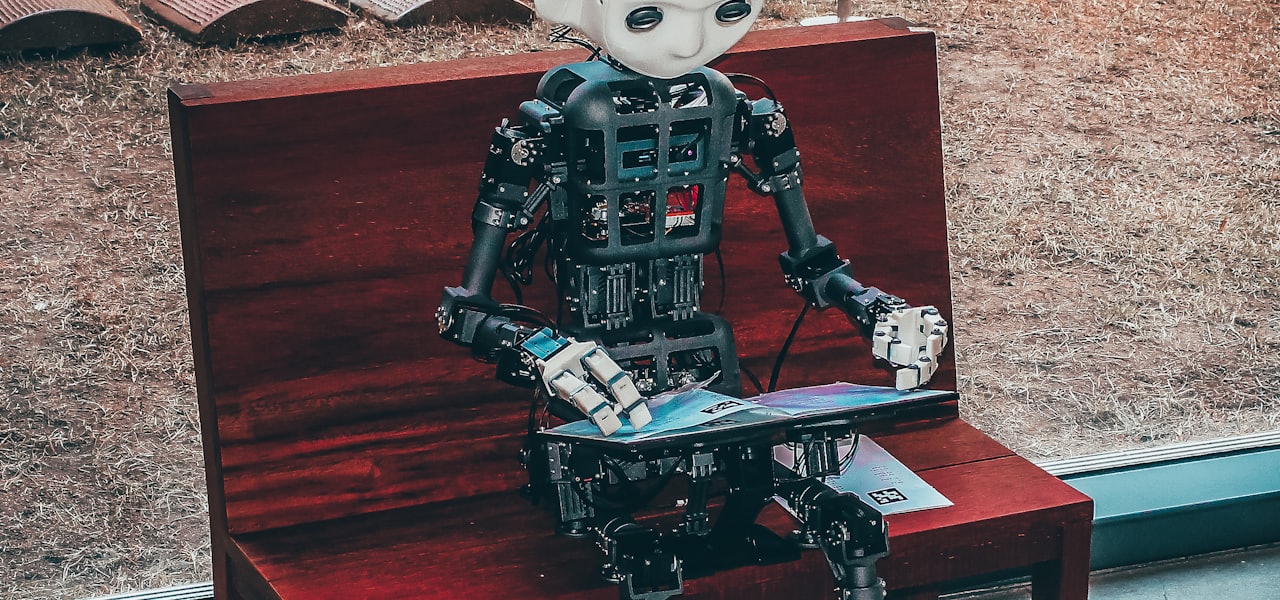
  • Embodied cognition

    Embodied cognition

    Embodied cognition represents a diverse group of theories which investigate how cognition is shaped by the bodily state and capacities of the organism. These embodied factors include the motor system, the perceptual system, bodily interactions with the environment (situatedness), and the assumptions about the world that shape the functional structure of the brain and body of the organism. Embodied cognition suggests that these elements are essential to a wide spectrum of cognitive functions, such as perception biases, memory recall, comprehension and high-level mental constructs (such as meaning attribution and categories) and performance on various cognitive tasks (reasoning or judgment). The embodied mind thesis challenges other theories, such as cognitivism, computationalism, and Cartesian dualism. It is closely related to the extended mind thesis, situated cognition, and enactivism. The modern version depends on understandings drawn from up-to-date research in psychology, linguistics, cognitive science, dynamical systems, artificial intelligence, robotics, animal cognition, plant cognition, and neurobiology. == Theory == Proponents of the embodied cognition thesis emphasize the active and significant role the body plays in the shaping of cognition and in the understanding of an agent's mind and cognitive capacities. In philosophy, embodied cognition holds that an agent's cognition, rather than being the product of mere (innate) abstract representations of the world, is strongly influenced by aspects of an agent's body beyond the brain itself. An embodied model of cognition opposes the disembodied Cartesian model, according to which all mental phenomena are non-physical and, therefore, not influenced by the body. With this opposition the embodiment thesis intends to reintroduce an agent's bodily experiences into any account of cognition. It is a rather broad thesis and encompasses both weak and strong variants of embodiment. In an attempt to reconcile cognitive science with human experience, the enactive approach to cognition defines "embodiment" as follows: By using the term embodied we mean to highlight two points: first that cognition depends upon the kinds of experience that come from having a body with various sensorimotor capacities, and second, that these individual sensorimotor capacities are themselves embedded in a more encompassing biological, psychological and cultural context. This double sense attributed to the embodiment thesis emphasizes the many aspects of cognition that researchers in different fields—such as philosophy, cognitive science, artificial intelligence, psychology, and neuroscience—are involved with. This general characterization of embodiment faces some difficulties: a consequence of this emphasis on the body, experience, culture, context, and the cognitive mechanisms of an agent in the world is that often distinct views and approaches to embodied cognition overlap. The theses of extended cognition and situated cognition, for example, are usually intertwined and not always carefully separated. And since each of the aspects of the embodiment thesis is endorsed to different degrees, embodied cognition should be better seen "as a research program rather than a well-defined unified theory". Some authors explain the embodiment thesis by arguing that cognition depends on an agent's body and its interactions with a determined environment. From this perspective, cognition in real biological systems is not an end in itself; it is constrained by the system's goals and capacities. Such constraints do not mean cognition is set by adaptive behavior (or autopoiesis) alone, but instead that cognition requires "some kind of information processing... the transformation or communication of incoming information". The acquiring of such information involves the agent's "exploration and modification of the environment". It would be a mistake, however, to suppose that cognition consists simply of building maximally accurate representations of input information...the gaining of knowledge is a stepping stone to achieving the more immediate goal of guiding behavior in response to the system's changing surroundings. Another approach to understanding embodied cognition comes from a narrower characterization of the embodiment thesis. The following narrower view of embodiment avoids any compromises to external sources other than the body and allows differentiating between embodied cognition, extended cognition, and situated cognition. Thus, the embodiment thesis can be specified as follows: Many features of cognition are embodied in that they are deeply dependent upon characteristics of the physical body of an agent, such that the agent's beyond-the-brain body plays a significant causal role, or a physically constitutive role, in that agent's cognitive processing. This thesis points out the core idea that an agent's body plays a significant role in shaping different features of cognition, such as perception, attention, memory, reasoning—among others. Likewise, these features of cognition depend on the kind of body an agent has. The thesis omits direct mention of some aspects of the "more encompassing biological, psychological and cultural context" included in the enactive definition, making it possible to separate embodied cognition, extended cognition, and situated cognition. In contrast to the embodiment thesis, the extended mind thesis limits cognitive processing neither to the brain nor even to the body, it extends it outward into the agent's world. Situated cognition emphasizes that this extension is not just a matter of including resources outside the head but stressing the role of probing and changing interactions with the agent's world. Cognition is situated in that it is inherently dependent upon the cultural and social contexts within which it takes place. This conceptual reframing of cognition as an activity influenced by the body has had significant implications. For instance, the view of cognition inherited by most contemporary cognitive neuroscience is internalist in nature. An agent's behavior along with its capacity to maintain (accurate) representations of the surrounding environment were considered as the product of "powerful brains that can maintain the world models and devise plans". From this perspective, cognizing was conceived as something that an isolated brain did. In contrast, accepting the role the body plays during cognitive processes allows us to account for a more encompassing view of cognition. This shift in perspective within neuroscience suggests that successful behavior in real-world scenarios demands the integration of several sensorimotor and cognitive (as well as affective) capacities of an agent. Thus, cognition emerges in the relationship between an agent and the affordances provided by the environment rather than in the brain alone. In 2002, a collection of positive characterizations summarizing what the embodiment thesis entails for cognition were offered. Professor of Cognitive Psychology Margaret Wilson argues that the general outlook of embodied cognition "displays an interesting co-variation of multiple observations and houses a number of different claims: (1) cognition is situated; (2) cognition is time-pressured; (3) we off-load cognitive work onto the environment; (4) the environment is part of the cognitive system; (5) cognition is for action; (6) offline cognition is bodily-based". According to Wilson, the first three and the fifth claim appear to be at least partially true, while the fourth claim is deeply problematic in that all things that have an impact on the elements of a system are not necessarily considered part of the system. The sixth claim has received the least attention in the literature on embodied cognition, yet it might be the most significant of the six claims as it shows how certain human cognitive capabilities, that previously were thought to be highly abstract, now appear to be leaning towards an embodied approach for their explanation. Wilson also describes at least five main (abstract) categories that combine both sensory and motor skills (or sensorimotor functions). The first three are working memory, episodic memory, and implicit memory; the fourth is mental imagery, and finally, the fifth concerns reasoning and problem solving. == History == The theory of embodied cognition, along with the multiple aspects it comprises, can be regarded as the imminent result of an intellectual skepticism towards the flourishment of the disembodied theory of mind put forth by René Descartes in the 17th century. According to Cartesian dualism, the mind is entirely distinct from the body and can be successfully explained and understood without reference to the body or to its processes. Research has been done to identify the set of ideas that would establish what could be considered as the early stages of embodied cognition around inquiries regarding the mind-body-soul rel

    Read more →
  • CloudPassage

    CloudPassage

    CloudPassage is a company that provides an automation platform, delivered via software as a service, that improves security for private, public, and hybrid cloud computing environments. CloudPassage is headquartered in San Francisco. == History == CloudPassage was founded by Carson Sweet, Talli Somekh, and Vitaliy Geraymovych in 2010. The company used cloud computing and big data analytics to implement security monitoring and control in a platform called Halo. CloudPassage spent a year in stealth developing the Halo technology, coming out of stealth mode to a closed beta in January 2011. In June 2012, the company launched the commercial product that included configuration security monitoring, network microsegmentation, and two-factor authentication for privileged access management. By 2013, CloudPassage expanded Halo to support large enterprises with advanced security and compliance requirements with a product called Halo Enterprise. The first round of venture funding for the company raised $6.5 million. In April 2012, CloudPassage raised $14 million. The financing round was led by Tenaya Capital. In February 2014, CloudPassage announced that it had raised $25.5 million in funding led by Shasta Ventures. In total, the company has invested over $30 million in its technology and raised approximately $88 million in capital. == Product == The CloudPassage platform provides cloud workload security and compliance for systems hosted in public or private cloud infrastructure environments, including hybrid cloud and multi-cloud workload hosting models. The flagship product the company offers is called Halo. Halo secures virtual servers in public, private, and hybrid cloud infrastructures and provides file integrity monitoring (FIM) while also administering firewall automation, vulnerability monitoring, network access control, security event alerting, and assessment. The Halo platform also provides security applications such as privileged access management, software vulnerability scanning, multifactor authentication, and log-based IDS. In December 2013, CloudPassage set up six servers with Microsoft Windows and Linux operating systems and combinations of popular programs and invited hackers to attempt to hack into the servers. The top prize was $5,000 and the winning hacker was a novice that completed the task in four hours. CloudPassage programmed the servers to use basic default security settings to show how vulnerable cloud computing programs can be to security threats. == Awards and recognition == In May 2011, Gigaom named CloudPassage in its list of the Top 50 Cloud Innovators. That same month, eWeek recognized CloudPassage as one of 16 Hot Startup Companies Flying Under the Radar. SC Magazine named CloudPassage an Industry Innovator in the Virtualization and Cloud Security category in 2012. Also in 2012, The Wall Street Journal named CloudPassage a runner-up in the Information Security category of its Technology Innovation Awards. The CloudPassage large-scale security program, Halo, won Best Security Solution in 2014 at the SIIA Codie awards.

    Read more →
  • Journal of Experimental and Theoretical Artificial Intelligence

    Journal of Experimental and Theoretical Artificial Intelligence

    The Journal of Experimental and Theoretical Artificial Intelligence is a quarterly peer-reviewed scientific journal published by Taylor and Francis. It covers all aspects of artificial intelligence and was established in 1989. The editor-in-chief is Eric Dietrich (Binghamton University), the deputy editors-in-chief are Li Pheng Khoo (School of Mechanical & Aerospace Engineering, Nanyang Technological University) and Antonio Lieto (Department of Computer Science, University of Turin). == Abstracting and indexing == The journal is abstracted and indexed in: According to the Journal Citation Reports, the journal has a 2020/2021 impact factor of 2.340 .

    Read more →
  • Pretext

    Pretext

    A pretext (adj.: pretextual) is an excuse to do something or say something that is not accurate. Pretexts may be based on a half-truth or developed in the context of a misleading fabrication. Pretexts have been used to conceal the true purpose or rationale behind actions and words. They are often heard in political speeches. In US law, a pretext usually describes false reasons that hide the true intentions or motivations for a legal action. If a party can establish a prima facie case for the proffered evidence, the opposing party must prove that these reasons were "pretextual" or false. This can be accomplished by directly demonstrating that the motivations behind the presentation of evidence is false, or indirectly by evidence that the motivations are not "credible". In Griffith v. Schnitzer, an employment discrimination case, a jury award was reversed by a Court of Appeals because the evidence was not sufficient that the defendant's reasons were "pretextual". That is, the defendant's evidence was either undisputed, or the plaintiff's was "irrelevant subjective assessments and opinions". A "pretextual" arrest by law enforcement officers is one carried out for illegal purposes such as to conduct an unjustified search and seizure. As one example of pretext, in the 1880s, the Chinese government raised money on the pretext of modernizing the Chinese navy. Instead, these funds were diverted to repair a ship-shaped, two-story pavilion which had been originally constructed for the mother of the Qianlong Emperor. This pretext and the Marble Barge are famously linked with Empress Dowager Cixi. This architectural folly, known today as the Marble Boat (Shifang), is "moored" on Lake Kunming in what the empress renamed the "Garden for Cultivating Harmony" (Yiheyuan). Another example of pretext was demonstrated in the speeches of the Roman orator Cato the Elder (234–149 BC). For Cato, every public speech became a pretext for a comment about Carthage. The Roman statesman had come to believe that the prosperity of ancient Carthage represented an eventual and inevitable danger to Rome. In the Senate, Cato famously ended every speech by proclaiming his opinion that Carthage had to be destroyed (Carthago delenda est). This oft-repeated phrase was the ultimate conclusion of all logical argument in every oration, regardless of the subject of the speech. This pattern persisted until his death in 149, which was the year in which the Third Punic War began. In other words, any subject became a pretext for reminding his fellow senators of the dangers Carthage represented. == Uses in warfare == The early years of Japan's Tokugawa shogunate were unsettled, with warring factions battling for power. The causes for the fighting were in part pretextual, but the outcome brought diminished armed conflicts after the Siege of Osaka in 1614–1615. The next two-and-a-half centuries of Japanese history were comparatively peaceful under the successors of Tokugawa Ieyasu and the bakufu government he established. === United States === During the War of 1812, US President James Madison was often accused of using impressment of American sailors by the Royal Navy as a pretext to invade Canada. The sinking of the USS Maine in 1898 was blamed on the Spanish, despite early reports of it having been an accident, contributing to U.S. entry into the Spanish–American War. The slogan "Remember the Maine! To hell with Spain!" was used as a rallying cry. Some have argued that United States President Franklin D. Roosevelt used the attack on Pearl Harbor by Japanese forces on December 7, 1941, as a pretext to enter World War II. American soldiers and supplies had been assisting British and Soviet operations for almost a year by this point, and the United States had thus "chosen a side", but due to the political climate in the States at the time and some campaign promises made by Roosevelt that he would not send American troops to fight in foreign wars, Roosevelt could not declare war for fear of public backlash. The attack on Pearl Harbor united the American people's resolve against the Axis powers and created the bellicose atmosphere in which to declare war. The 1964 Gulf of Tonkin incident, later revealed to have been partly provoked and partly not to have happened, was used to bring the United States fully into the Vietnam War. United States President George W. Bush used the September 11 attacks and faulty intelligence about the existence of weapons of mass destruction as a pretext for the war in Iraq. == Social engineering == A type of social engineering called pretexting uses a pretext to elicit information fraudulently from a target. The pretext in this case includes research into the identity of a certain authorized person or personality type in order to establish legitimacy in the mind of the target.

    Read more →
  • Johns Hopkins Beast

    Johns Hopkins Beast

    The Johns Hopkins Beast was a mobile automaton, an early pre-robot, built in the 1960s at the Johns Hopkins University Applied Physics Laboratory. The machine had a rudimentary intelligence and the ability to survive on its own. As it wandered through the white halls of the laboratory, it would seek black wall outlets. When it found one it would plug in and recharge. The robot was cybernetic. It did not use a computer. Its control circuitry consisted of dozens of transistors controlling analog voltages. It used photocell optics and sonar to navigate. The 2N404 transistors were used to create NOR logic gates that implemented the Boolean logic to tell it what to do when a specific sensor was activated. The 2N404 transistors were also used to create timing gates to tell it how long to do something. 2N1040 Power transistors were used to control the power to the motion treads, the boom, and the charging mechanism. The original sensors in Mod I were physical touch only. The wall socket was detected by physical switches on the arm that followed the wall. Once detected, two electrical prongs were extended until they entered the wall socket and made the electrical connection to charge the vehicle. The stairway, doors, and pipes on the hall wall were also detected by physical switches and recognized by appropriate logic. The sonar guidance system was developed for Mod I and improved for Mod II. It used two ultrasonic transducers to determine distance, location within the halls, and obstructions in its path. This provided "The Beast" with bat-like guidance. At this point, it could detect obstructions in the hallway, such as people. Once an obstruction was detected, the Beast would slow down and then decide whether to stop or divert around the obstruction. It could also ultrasonically recognize the stairway and doorways to take appropriate action. An optical guidance system was added to Mod II. This provided, among other capabilities, the ability to optically identify the black wall sockets that contrasted with the white wall. The Hopkins Beast Autonomous Robot Mod II link below was written by Dr. Ronald McConnell, at that time a co-op student and one of the designers for Mod II.

    Read more →
  • Network Abstraction Layer

    Network Abstraction Layer

    The Network Abstraction Layer (NAL) is a part of the H.264/AVC and HEVC video coding standards. The main goal of the NAL is the provision of a "network-friendly" video representation addressing "conversational" (video telephony) and "non conversational" (storage, broadcast, or streaming) applications. NAL has achieved a significant improvement in application flexibility relative to prior video coding standards. == Introduction == An increasing number of services and growing popularity of high definition TV are creating greater needs for higher coding efficiency. Moreover, other transmission media such as cable modem, xDSL, or UMTS offer much lower data rates than broadcast channels, and enhanced coding efficiency can enable the transmission of more video channels or higher quality video representations within existing digital transmission capacities. Video coding for telecommunication applications has diversified from ISDN and T1/E1 service to embrace PSTN, mobile wireless networks, and LAN/Internet network delivery. Throughout this evolution, continued efforts have been made to maximize coding efficiency while dealing with the diversification of network types and their characteristic formatting and loss/error robustness requirements. The H.264/AVC and HEVC standards are designed for technical solutions including areas like broadcasting (over cable, satellite, cable modem, DSL, terrestrial, etc.) interactive or serial storage on optical and magnetic devices, conversational services, video-on-demand or multimedia streaming, multimedia messaging services, etc. Moreover, new applications may be deployed over existing and future networks. This raises the question about how to handle this variety of applications and networks. To address this need for flexibility and customizability, the design covers a NAL that formats the Video Coding Layer (VCL) representation of the video and provides header information in a manner appropriate for conveyance by a variety of transport layers or storage media. The NAL is designed in order to provide "network friendliness" to enable simple and effective customization of the use of VCL for a broad variety of systems. The NAL facilitates the ability to map VCL data to transport layers such as: RTP/IP for any kind of real-time wire-line and wireless Internet services. File formats, e.g., ISO MP4 for storage and MMS. H.32X for wireline and wireless conversational services. MPEG-2 systems for broadcasting services, etc. The full degree of customization of the video content to fit the needs of each particular application is outside the scope of the video coding standardization effort, but the design of the NAL anticipates a variety of such mappings. Some key concepts of the NAL are NAL units, byte stream, and packet formats uses of NAL units, parameter sets, and access units. A short description of these concepts is given below. == NAL units == The coded video data is organized into NAL units, each of which is effectively a packet that contains an integer number of bytes. The first byte of each H.264/AVC NAL unit is a header byte that contains an indication of the type of data in the NAL unit. For HEVC the header was extended to two bytes. All the remaining bytes contain payload data of the type indicated by the header. The NAL unit structure definition specifies a generic format for use in both packet-oriented and bitstream-oriented transport systems, and a series of NAL units generated by an encoder is referred to as a NAL unit stream. == NAL Units in Byte-Stream Format Use == Some systems require delivery of the entire or partial NAL unit stream as an ordered stream of bytes or bits within which the locations of NAL unit boundaries need to be identifiable from patterns within the coded data itself. For use in such systems, the H.264/AVC and HEVC specifications define a byte stream format. In the byte stream format, each NAL unit is prefixed by a specific pattern of three bytes called a start code prefix. The boundaries of the NAL unit can then be identified by searching the coded data for the unique start code prefix pattern. The use of emulation prevention bytes guarantees that start code prefixes are unique identifiers of the start of a new NAL unit. A small amount of additional data (one byte per video picture) is also added to allow decoders that operate in systems that provide streams of bits without alignment to byte boundaries to recover the necessary alignment from the data in the stream. Additional data can also be inserted in the byte stream format that allows expansion of the amount of data to be sent and can aid in achieving more rapid byte alignment recovery, if desired. == NAL Units in Packet-Transport System Use == In other systems (e.g., IP/RTP systems), the coded data is carried in packets that are framed by the system transport protocol, and identification of the boundaries of NAL units within the packets can be established without use of start code prefix patterns. In such systems, the inclusion of start code prefixes in the data would be a waste of data carrying capacity, so instead the NAL units can be carried in data packets without start code prefixes. == VCL and Non-VCL NAL Units == NAL units are classified into VCL and non-VCL NAL units. VCL NAL units contain the data that represents the values of the samples in the video pictures. Non-VCL NAL units contain any associated additional information such as parameter sets (important header data that can apply to a large number of VCL NAL units) and supplemental enhancement information (timing information and other supplemental data that may enhance usability of the decoded video signal but are not necessary for decoding the values of the samples in the video pictures). == Parameter Sets == A parameter set contains shared configuration data that is carried in non-VCL NAL units. Parameter sets are typically reused when decoding many coded pictures within a video sequence. Each VCL NAL unit references a picture parameter set (PPS), which in turn references a sequence parameter set (SPS). There are two types of parameter sets: Sequence parameter set (SPS), which specifies mostly constant configuration such as resolution, bit depth, or chroma format. (For a concrete implementation, see FFmpeg's SPS struct.) Picture parameter set (PPS), which applies on top of an SPS, and specifies configuration such as QP offsets. (For a concrete implementation, see FFmpeg's PPS struct.) The sequence and picture parameter-set mechanism decouples the transmission of infrequently changing information from the transmission of coded representations of the values of the samples in the video pictures. Each VCL NAL unit contains an identifier that refers to the content of the relevant picture parameter set and each picture parameter set contains an identifier that refers to the content of the relevant sequence parameter set. In this manner, a small amount of data (the identifier) can be used to refer to a larger amount of information (the parameter set) without repeating that information within each VCL NAL unit. Sequence and picture parameter sets can be sent well ahead of the VCL NAL units that they apply to, and can be repeated to provide robustness against data loss. In some applications, parameter sets may be sent within the channel that carries the VCL NAL units (termed "in-band" transmission). In other applications, it can be advantageous to convey the parameter sets "out-of-band" using a more reliable transport mechanism than the video channel itself. == Access Units == A set of NAL units in a specified form is referred to as an access unit. The decoding of each access unit results in one decoded picture. Each access unit contains a set of VCL NAL units that together compose a primary coded picture. It may also be prefixed with an access unit delimiter to aid in locating the start of the access unit. Some supplemental enhancement information containing data such as picture timing information may also precede the primary coded picture. The primary coded picture consists of a set of VCL NAL units consisting of slices or slice data partitions that represent the samples of the video picture. Following the primary coded picture may be some additional VCL NAL units that contain redundant representations of areas of the same video picture. These are referred to as redundant coded pictures, and are available for use by a decoder in recovering from loss or corruption of the data in the primary coded pictures. Decoders are not required to decode redundant coded pictures if they are present. Finally, if the coded picture is the last picture of a coded video sequence (a sequence of pictures that is independently decodable and uses only one sequence parameter set), an end of sequence NAL unit may be present to indicate the end of the sequence; and if the coded picture is the last coded picture in the entire NAL unit stream, an end of stream NAL unit may be present to

    Read more →
  • DARPA AlphaDogfight

    DARPA AlphaDogfight

    The DARPA AlphaDogfight was a 2019–2020 DARPA program that pitted computers using F-16 flight simulators against one another. The computers were managed by eight teams of humans, who competed in a single-round elimination for the right to battle a skilled human dogfighter. Heron Systems corporation wrote a deep reinforcement learning software tool that bested the human pilot by a score of 5–0. The tournament program was managed by the Applied Physics Laboratory. The trials took place in October 2019 and January 2020 while the finals were held in August 2020. In 2024 a successor version of the program was tested with in the physical world with the X-62A.

    Read more →
  • LG ThinQ

    LG ThinQ

    LG ThinQ (pronounced as "think-cue"; sometimes known as LG webOS) is a smart home and artificial intelligence brand launched by LG Electronics in 2017, featuring products that are equipped with voice control and artificial intelligence technology. The brand was originally launched for home appliances and consumer electronics, such as televisions, smart home devices, mobile devices, refrigerators, air conditioners and related services. The name was first used in 2011 for LG's THINQ-branded smart appliances, which were introduced at the Consumer Electronics Show in Las Vegas. In December 2017, LG announced ThinQ as a unified brand for artificial intelligence-enabled home appliances, consumer electronics and services.In February 2018, LG announced the LG V30S ThinQ, which is the first phone to have the "ThinQ" branding. == History == The branding was first introduced in 2011 in the Consumer Electronics Show (CES) in Las Vegas as THINQ. The first ThinQ product was a smart refrigerator, with features such as smart savings options, food management system, washing machine, oven and robotic vacuum cleaner and different software in the LCD screen on the fridge. The unified branding was then officially launched as ThinQ at CES 2017 as an artificial intelligence-based brand for all their smart products. The company announced DeepThinQ, a deep-learning technology for connected products, and later opened an Artificial Intelligence Lab in Seoul to coordinate research involving voice, video, sensors and machine learning. In December 2017, LG announced ThinQ as a brand designation for home appliances, consumer electronics, and services incorporating artificial intelligence, applied to its 2018 product lineup. In 2018, LG extended the ThinQ brand to smartphones with the LG V30S ThinQ. The phone used ThinQ branding for AI camera features, including image recognition and shooting-mode recommendations. That year, LG also used ThinQ branding on televisions with smart-assistant features, as manufacturers increasingly added voice assistants to TV platforms. In 2022, LG first introduced ThinQ UP, a software-upgradable appliance concept that allows compatible appliances to receive new features through the ThinQ app. The program included appliances such as refrigerators, washing machines, dryers, ovens and dishwashers, and was covered as part of a wider move toward upgradeable connected appliances. In 2024, LG introduced ThinQ ON, an AI-powered smart home hub designed to connect LG appliances and other smart home devices. It expanded ThinQ from an appliance-control platform into a broader smart home system. == Platform an app == LG ThinQ operates as a smart home platform and mobile app for connecting compatible LG appliances and consumer electronics. The app is used to control and monitor supported products, including kitchen appliances, laundry appliances, air purifiers, vacuum cleaners and televisions. Depending on the product and market, the ThinQ app can provide remote control, status monitoring, downloadable appliance cycles, diagnostic support, maintenance alerts and software-based feature updates. In 2024, LG introduced ThinQ ON as a hub for the ThinQ platform. The device supports Matter, Thread and Wi-Fi connectivity and includes a built-in voice assistant. The Verge described the product as part of LG's effort to expand ThinQ from an appliance-control platform into a broader smart home system competing with platforms such as Samsung SmartThings and Apple Home. == Features == LG ThinQ products use connected-device features, voice control to interact with users, and use sensor data and different features such as product recognition and learning engine technologies to enhance their abilities. Deep ThinQ (or LG ThinQ AI) was introduced as LG's own AI platform. It was reported that it could engage in two-way conversations with users and could educate itself according to users' behaviour patterns and habits. At the 2017 ThinQ launch, LG said the brand would cover products and services using artificial intelligence technologies from LG and partner companies. ThinQ features vary by product category. On appliances, the platform may support remote operation, product-status notifications, downloaded cycles and diagnostic functions. On televisions, ThinQ branding has been associated with voice-control and smart-assistant features. In 2018, LG ThinQ-branded TVs added support for Google Assistant and Alexa voice commands. As of August 30, 2018, LG's ThinQ products now communicate with each other for tasks such as going to an event or following a recipe. They have sensors for communicating with other ThinQ devices and appliances. == Products == LG ThinQ branding and connectivity features have been used across several LG product categories, including home appliances, televisions, air conditioners and mobile devices. Home appliances LG has applied ThinQ branding and app connectivity to home appliances such as refrigerators, washing machines, dryers, dishwashers, cooking appliances, air purifiers and vacuum cleaners. Through the ThinQ app, compatible appliances can be monitored or controlled remotely. Some compatible appliances can also receive downloadable cycles, diagnostic support, maintenance alerts and software-based feature updates through ThinQ UP. Televisions and home entertainment LG has used ThinQ branding on smart televisions and other home entertainment products. In 2018, LG ThinQ-branded televisions added support for smart-assistant voice commands, including Google Assistant. Smartphones LG G6 (ThinQ branding was added to startup screen in an update) LG V30 (ThinQ branding was added to startup screen in an update) LG V30S ThinQ LG V35 ThinQ LG G7 ThinQ LG V40 ThinQ LG G8 ThinQ LG G8s ThinQ LG G8x ThinQ LG V50 ThinQ LG V60 ThinQ LG Velvet (Generally considered a ThinQ product in other countries)

    Read more →