Cognitive philology is the science that studies written and oral texts as the product of human mental processes. Studies in cognitive philology compare documentary evidence emerging from textual investigations with results of experimental research, especially in the fields of cognitive and ecological psychology, neurosciences and artificial intelligence. "The point is not the text, but the mind that made it". Cognitive Philology aims to foster communication between literary, textual, philological disciplines on the one hand and researches across the whole range of the cognitive, evolutionary, ecological and human sciences on the other. Cognitive philology: investigates transmission of oral and written text, and categorization processes which lead to classification of knowledge, mostly relying on the information theory; studies how narratives emerge in so called natural conversation and selective process which lead to the rise of literary standards for storytelling, mostly relying on embodied semantics; explores the evolutive and evolutionary role played by rhythm and metre in human ontogenetic and phylogenetic development and the pertinence of the semantic association during processing of cognitive maps; Provides the scientific ground for multimedia critical editions of literary texts. Among the founding thinkers and noteworthy scholars devoted to such investigations are: Alan Richardson: Studies Theory of Mind in early-modern and contemporary literature. Anatole Pierre Fuksas Benoît de Cornulier David Herman: Professor of English at North Carolina State University and an adjunct professor of linguistics at Duke University. He is the author of "Universal Grammar and Narrative Form" and the editor of "Narratologies: New Perspectives on Narrative Analysis". Domenico Fiormonte François Recanati Gilles Fauconnier, a professor in Cognitive science at the University of California, San Diego. He was one of the founders of cognitive linguistics in the 1970s through his work on pragmatic scales and mental spaces. His research explores the areas of conceptual integration and compressions of conceptual mappings in terms of the emergent structure in language. Julián Santano Moreno Luca Nobile Manfred Jahn in Germany Mark Turner Paolo Canettieri
BiP (software)
BiP is a freeware instant messaging application developed by Lifecell Ventures Cooperatief U.A., a subsidiary of Turkcell incorporated in the Netherlands. It allows users to send text messages, voice messages and video calling, and it can be downloaded from the App Store, Google Play, and Huawei AppGallery. BiP has over 53 million users worldwide, and was first released in 2013. == Functions == BiP is a secure, and free communication platform. BiP allows making video and audio calls, allows sharing images, videos and location. BiP includes instant translations to 106 languages and exchange rates. President Erdoğan's Communications Office opposed WhatsApp's enforcement of its updated privacy policy and announced that Erdoğan left WhatsApp and opened an account in Telegram and BiP. The Turkish Ministry of National Defense has announced that it will move information groups to BiP for the same reason. == Others == Banglalink announced a BiP messenger partnership in Bangladesh The Communications Office of President Erdoğan opposed WhatsApp's enforcement of its updated privacy policy and announced that Erdoğan left WhatsApp and opened an account in Telegram and BiP. The Turkish Ministry of National Defense has announced that it will move information groups to BiP for the same reason. The CEO of BiP is Burak Akinci. The number of downloads of the app is 80 million globally.
Irwin Sobel
Irwin Sobel (born September 12, 1940) is a scientist and researcher in digital image processing. == Biography == Irwin Sobel was born in New York City. He graduated from MIT in 1961 and completed his Ph.D. research at the Stanford Artificial Intelligence Project (SAIL) with thesis Camera Models and Machine Perception. His Ph.D. advisor was Jerome A. Feldman. Starting in 1973, he spent nine years doing postdoctoral research at Columbia University. After 1982, he worked as a Senior Researcher at HP Labs. == Sobel operator == In 1968, Sobel gave a talk entitled "An Isotropic 3x3 Image Gradient Operator" at SAIL; this method became known as the Sobel operator. It was developed jointly with a colleague, Gary Feldman, also at SAIL.
The Triple Revolution
"The Triple Revolution" was an open memorandum sent to U.S. President Lyndon B. Johnson and other government figures on March 22, 1964. It concerned three megatrends of the time: increasing use of automation, the nuclear arms race, and advancements in human rights. Drafted under the auspices of the Center for the Study of Democratic Institutions, it was signed by an array of noted social activists, professors, and technologists who identified themselves as the Ad Hoc Committee on the Triple Revolution. The chief initiator of the proposal was W. H. "Ping" Ferry, at that time a vice-president of CSDI, basing it in large part on the ideas of the futurist Robert Theobald. == Overview == The statement identified three revolutions underway in the world: the cybernation revolution of increasing automation; the weaponry revolution of mutually assured destruction; and the human rights revolution. It discussed primarily the cybernation revolution. The committee claimed that machines would usher in "a system of almost unlimited productive capacity" while continually reducing the number of manual laborers needed, and increasing the skill needed to work, thereby producing increasing levels of unemployment. It proposed that the government should ease this transformation through large-scale public works, low-cost housing, public transit, electrical power development, income redistribution, union representation for the unemployed, and government restraint on technology deployment. == Legacy == Martin Luther King Jr.'s final Sunday sermon, delivered six days before his April 1968 assassination, explicitly references the thesis of "The Triple Revolution": There can be no gainsaying of the fact that a great revolution is taking place in the world today. In a sense it is a triple revolution: that is, a technological revolution, with the impact of automation and cybernation; then there is a revolution in weaponry, with the emergence of atomic and nuclear weapons of warfare; then there is a human rights revolution, with the freedom explosion that is taking place all over the world. Yes, we do live in a period where changes are taking place. And there is still the voice crying through the vista of time saying, "Behold, I make all things new; former things are passed away." In Harlan Ellison's 1967 anthology Dangerous Visions, Philip José Farmer's story "Riders of the Purple Wage" uses the Triple Revolution document as the premise of a future society, in which the "purple wage" of the title is a guaranteed income dole on which most of the population lives. At the 1968 World Science Fiction Convention in San Francisco, Farmer delivered a lengthy Guest of Honor speech in which he called for the founding of a grassroots activist organization called REAP which would work for implementation of the Ad Hoc Committee's recommendations. Looking back on the proposal in his 2008 book, Daniel Bell wrote: "the cybernetic revolution quickly proved to be illusory. There were no spectacular jumps in productivity. ... Cybernation had proved to be one more instance of the penchant for overdramatizing a momentary innovation and blowing it up far out of proportion to its actuality. ... The image of a completely automated production economy—with an endless capacity to turn out goods—was simply a social-science fiction of the early 1960s. Paradoxically, the vision of Utopia was suddenly replaced by the spectre of Doomsday. In place of the early-sixties theme of endless plenty, the picture by the end of the decade was one of a fragile planet of limited resources whose finite stocks were being rapidly depleted, and whose wastes from soaring industrial production were polluting the air and waters." In his 2015 book Rise of the Robots, Martin Ford claims The Triple Revolution's predictions of steady decline in future employment were not wrong, but rather premature. He cites "Seven Deadly Trends" that began in the 1970s-1980s and by the mid-2010s appeared set to continue: Stagnation in real wages Decline in labor's share of national income in many countries (breakdown of Bowley's law), while corporate profits increased Declining labor force participation Diminishing job creation, lengthening jobless recoveries, and soaring long-term unemployment Rising inequality Declining incomes, and underemployment for recent college graduates Polarization and part-time jobs (middle-class jobs are disappearing, to be replaced by a small number of high-paying jobs and large number of low-paying jobs) According to Ford, the 1960s were part of what in retrospect seems like a golden age for labor in the United States, when productivity and wages rose together in near lockstep, and unemployment was low. But after about 1980, wages began stagnating while productivity continued to rise. Labor's share of the economic output began to decline. Ford describes the role that automation and information technology play in these trends, and how new technologies including narrow AI threaten to destroy jobs faster than displaced workers can be retrained for new jobs, before automation takes the new jobs as well. This includes many job categories, such as in transportation, that were never threatened by automation before. According to a 2013 study, about 47% of US jobs are susceptible to automation. == Signatories ==
Signal transfer function
The signal transfer function (SiTF) is a measure of the signal output versus the signal input of a system such as an infrared system or sensor. There are many general applications of the SiTF. Specifically, in the field of image analysis, it gives a measure of the noise of an imaging system, and thus yields one assessment of its performance. == SiTF evaluation == In evaluating the SiTF curve, the signal input and signal output are measured differentially; meaning, the differential of the input signal and differential of the output signal are calculated and plotted against each other. An operator, using computer software, defines an arbitrary area, with a given set of data points, within the signal and background regions of the output image of the infrared sensor, i.e. of the unit under test (UUT), (see "Half Moon" image below). The average signal and background are calculated by averaging the data of each arbitrarily defined region. A second order polynomial curve is fitted to the data of each line. Then, the polynomial is subtracted from the average signal and background data to yield the new signal and background. The difference of the new signal and background data is taken to yield the net signal. Finally, the net signal is plotted versus the signal input. The signal input of the UUT is within its own spectral response. (e.g. color-correlated temperature, pixel intensity, etc.). The slope of the linear portion of this curve is then found using the method of least squares. == SiTF curve == The net signal is calculated from the average signal and background, as in signal to noise ratio (imaging)#Calculations. The SiTF curve is then given by the signal output data, (net signal data), plotted against the signal input data (see graph of SiTF to the right). All the data points in the linear region of the SiTF curve can be used in the method of least squares to find a linear approximation. Given n {\displaystyle n\,} data points ( x i , y i ) {\displaystyle (x_{i}\,,y_{i}\,)} a best fit line parameterized as y = m x + b {\displaystyle y=mx+b\,} is given by: m = ∑ x i y i n − ∑ x i n ∑ y i n ∑ x i 2 n − ( ∑ x i n ) 2 b = ∑ y i n − m ∑ x i n {\displaystyle m={\frac {{\frac {\sum x_{i}y_{i}}{n}}-{\frac {\sum x_{i}}{n}}{\frac {\sum y_{i}}{n}}}{{\frac {\sum x_{i}^{2}}{n}}-({\frac {\sum x_{i}}{n}})^{2}}}\qquad \qquad b={\frac {\sum y_{i}}{n}}-m{\frac {\sum x_{i}}{n}}}
StatMuse
StatMuse Inc. is an American artificial intelligence company founded in 2014. It operates an eponymous website that hosts a database of sports statistics covering the four major North American sports leagues, the Women's National Basketball Association (WNBA), NCAA Division I men's basketball, NCAA Division I Football Bowl Subdivision, the Big Five association football leagues in Europe, and various professional golf tours. == History == The company was founded by friends Adam Elmore and Eli Dawson in 2014. In email correspondence to the Springfield News-Leader, Elmore detailed that he and Dawson, fans of the National Basketball Association (NBA), were compelled to create StatMuse after they realized there was no online platform where they could search "Lebron James most points" [sic] and quickly get a result "showing his highest scoring games." As a startup, the company's goal was to utilize a type of artificial intelligence called natural language processing (NLP) for sports. In 2015, the company was part of the second group of startups accepted into the Disney Accelerator program. The company secured support from several investors, including The Walt Disney Company, Techstars, Allen & Company, the NFL Players Association, Greycroft and NBA Commissioner David Stern. As part of their partnership with Disney, StatMuse signed a content deal with ESPN (owned by Disney) to provide stats content on social media and television during the 2015–16 NBA season. Initially, the company only had stats available for the NBA, but eventually expanded to provide stats for the other major North American sports leagues. The company's initial demographic was players of fantasy sports, but it eventually expanded to target general sports fans as well. StatMuse offers responses to user queries in the voices of sports-related public figures. Dawson shared with VentureBeat that StatMuse brings people in and records them saying different words and phrases. These celebrity voices were made accessible through Google's Google Assistant service, Microsoft's Cortana virtual assistant, and Amazon's Echo devices. The company launched its phone app in September 2017. The app allows users to access StatMuse's sports statistics database by submitting queries in their natural language. Upon the launch of the phone app, Fitz Tepper of TechCrunch wrote that: "The technology isn't perfect – some of the pauses between words are a bit awkward, making it clear that some phrases are being stitched together on the fly. But this is the exception, and on the whole, most responses sound pretty good." StatMuse plug-ins for Slack and Facebook Messenger were also made, providing text-based sports stats. In 2019, StatMuse received investment from the Google Assistant Investment program. The service launched a premium option dubbed StatMuse+ in May 2023, offering options that had previously been included for free, such as unlimited searches and full results in data tables. The premium version also included early access to new features and a personalized search history, as well as not having ads. The app received a variety of feedback. In January 2024, the service launched a Premier League version of the website dubbed StatMuse FC. It is planned to introduce more leagues on the website.
Human–robot collaboration
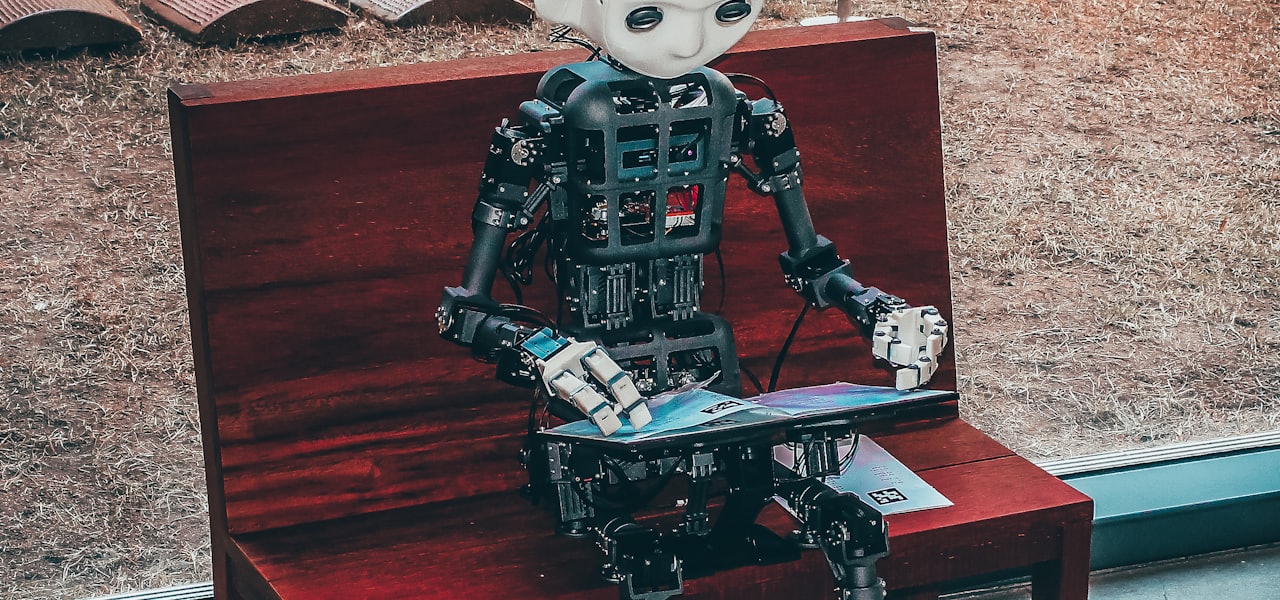
Human-Robot Collaboration is the study of collaborative processes in human and robot agents work together to achieve shared goals. Many new applications for robots require them to work alongside people as capable members of human-robot teams. These include robots for homes, hospitals, and offices, space exploration and manufacturing. Human-Robot Collaboration (HRC) is an interdisciplinary research area comprising classical robotics, human-computer interaction, artificial intelligence, process design, layout planning, ergonomics, cognitive sciences, and psychology. Industrial applications of human-robot collaboration involve Collaborative Robots, or cobots, that physically interact with humans in a shared workspace to complete tasks such as collaborative manipulation or object handovers. == Collaborative Activity == Collaboration is defined as a special type of coordinated activity, one in which two or more agents work jointly with each other, together performing a task or carrying out the activities needed to satisfy a shared goal. The process typically involves shared plans, shared norms and mutually beneficial interactions. Although collaboration and cooperation are often used interchangeably, collaboration differs from cooperation as it involves a shared goal and joint action where the success of both parties depend on each other. For effective human-robot collaboration, it is imperative that the robot is capable of understanding and interpreting several communication mechanisms similar to the mechanisms involved in human-human interaction. The robot must also communicate its own set of intents and goals to establish and maintain a set of shared beliefs and to coordinate its actions to execute the shared plan. In addition, all team members demonstrate commitment to doing their own part, to the others doing theirs, and to the success of the overall task. == Theories Informing Human-Robot Collaboration == Human-human collaborative activities are studied in depth in order to identify the characteristics that enable humans to successfully work together. These activity models usually aim to understand how people work together in teams, how they form intentions and achieve a joint goal. Theories on collaboration inform human-robot collaboration research to develop efficient and fluent collaborative agents. === Belief Desire Intention Model === The belief-desire-intention (BDI) model is a model of human practical reasoning that was originally developed by Michael Bratman. The approach is used in intelligent agents research to describe and model intelligent agents. The BDI model is characterized by the implementation of an agent's beliefs (the knowledge of the world, state of the world), desires (the objective to accomplish, desired end state) and intentions (the course of actions currently under execution to achieve the desire of the agent) in order to deliberate their decision-making processes. BDI agents are able to deliberate about plans, select plans and execute plans. === Shared Cooperative Activity === Shared Cooperative Activity defines certain prerequisites for an activity to be considered shared and cooperative: mutual responsiveness, commitment to the joint activity and commitment to mutual support. An example case to illustrate these concepts would be a collaborative activity where agents are moving a table out the door, mutual responsiveness ensures that movements of the agents are synchronized; a commitment to the joint activity reassures each team member that the other will not at some point drop his side; and a commitment to mutual support deals with possible breakdowns due to one team member's inability to perform part of the plan. === Joint Intention Theory === Joint Intention Theory proposes that for joint action to emerge, team members must communicate to maintain a set of shared beliefs and to coordinate their actions towards the shared plan. In collaborative work, agents should be able to count on the commitment of other members, therefore each agent should inform the others when they reach the conclusion that a goal is achievable, impossible, or irrelevant. == Approaches to Human-Robot Collaboration == The approaches to human-robot collaboration include human emulation (HE) and human complementary (HC) approaches. Although these approaches have differences, there are research efforts to develop a unified approach stemming from potential convergences such as Collaborative Control. === Human Emulation === The human emulation approach aims to enable computers to act like humans or have human-like abilities in order to collaborate with humans. It focuses on developing formal models of human-human collaboration and applying these models to human-computer collaboration. In this approach, humans are viewed as rational agents who form and execute plans for achieving their goals and infer other people's plans. Agents are required to infer the goals and plans of other agents, and collaborative behavior consists of helping other agents to achieve their goals. === Human Complementary === The human complementary approach seeks to improve human-computer interaction by making the computer a more intelligent partner that complements and collaborates with humans. The premise is that the computer and humans have fundamentally asymmetric abilities. Therefore, researchers invent interaction paradigms that divide responsibility between human users and computer systems by assigning distinct roles that exploit the strengths and overcome the weaknesses of both partners. == Key Aspects == Specialization of Roles: Based on the level of autonomy and intervention, there are several human-robot relationships including master-slave, supervisor–subordinate, partner–partner, teacher–learner and fully autonomous robot. In addition to these roles, homotopy (a weighting function that allows a continuous change between leader and follower behaviors) was introduced as a flexible role distribution. Establishing shared goal(s): Through direct discussion about goals or inference from statements and actions, agents must determine the shared goals they are trying to achieve. Allocation of Responsibility and Coordination: Agents must decide how to achieve their goals, determine what actions will be done by each agent, and how to coordinate the actions of individual agents and integrate their results. Shared context: Agents must be able to track progress toward their goals. They must keep track of what has been achieved and what remains to be done. They must evaluate the effects of actions and determine whether an acceptable solution has been achieved. Communication: Any collaboration requires communication to define goals, negotiate over how to proceed and who will do what, and evaluate progress and results. Adaptation and learning: Collaboration over time require partners to adapt themselves to each other and learn from one's partner both directly or indirectly. Time and space: The time-space taxonomy divides human-robot interaction into four categories based on whether the humans and robots are using computing systems at the same time (synchronous) or different times (asynchronous) and while in the same place (collocated) or in different places (non-collocated). Ergonomics: Human factors and ergonomics are one of the key aspects for a sustainable human-robot collaboration. The robot control system can use biomechanical models and sensors to optimize various ergonomic metrics, such as muscle fatigue.