Once is an online dating platform founded in 2015. The platform offers users one selected match per day for more meaningful connections. == History == Once was established in 2015, the founders included dating industry entrepreneur Jean Meyer, who became a CEO of the company, as well as Guillaume Sempe and Guilhem Duche. It focused on providing a single daily match to its users. On its early stages Once secured a $3.5 million seed round from Partech Ventures and some private investors. The same year, it opened offices in Paris, and London. By 2016, it reached 1 million users. In 2020, the company was acquired by Dating Group for $18 million. Following the acquisition, Once underwent rebranding. Alexandra Beaumont took over leadership of the brand in 2021, driving growth, rebranding, and innovation. == Overview == Once provides an online dating service with a focus on thoughtful connections. Users receive one selected match per day, which encourages meaningful interactions. The platform operates primarily in the United States, the United Kingdom, Canada, France, and Spain. The platform is supported by Android, iOS, and Apple Watch OS.
CPU modes
CPU modes (also called processor modes, CPU states, CPU privilege levels and other names) are operating modes for the central processing unit of most computer architectures that place restrictions on the type and scope of operations that can be performed by instructions being executed by the CPU. For example, this design allows an operating system to run with more privileges than application software by running the operating systems and applications in different modes. Ideally, only highly trusted kernel code is allowed to execute in the unrestricted mode; everything else (including non-supervisory portions of the operating system) runs in a restricted mode and must use a system call (via interrupt) to request the kernel perform on its behalf any operation that could damage or compromise the system, making it impossible for untrusted programs to alter or damage other programs (or the computing system itself). Device drivers are designed to be part of the kernel due to the need for frequent I/O access. Multiple modes can be implemented, e.g. allowing a hypervisor to run multiple operating system supervisors beneath it, which is the basic design of many virtual machine systems available today. == Mode types == The unrestricted mode is often called kernel mode, but many other designations exist (master mode, supervisor mode, privileged mode, etc.). Restricted modes are usually referred to as user modes, but are also known by many other names (slave mode, problem state, etc.). Hypervisor Hypervisor mode is used to support virtualization, allowing the simultaneous operation of multiple operating systems. Kernel and user In kernel mode, the CPU may perform any operation allowed by its architecture; any instruction may be executed, any I/O operation initiated, any area of memory accessed, and so on. In the other CPU modes, certain restrictions on CPU operations are enforced by the hardware. Typically, certain instructions are not permitted (especially those—including I/O operations—that could alter the global state of the machine), some memory areas cannot be accessed, etc. User-mode capabilities of the CPU are typically a subset of those available in kernel mode, but in some cases, such as hardware emulation of non-native architectures, they may be significantly different from those available in standard kernel mode. Some CPU architectures support more modes than those, often with a hierarchy of privileges. These architectures are often said to have ring-based security, wherein the hierarchy of privileges resembles a set of concentric rings, with the kernel mode in the center. Multics hardware was the first significant implementation of ring security, but many other hardware platforms have been designed along similar lines, including the Intel 80286 protected mode, and the IA-64 as well, though it is referred to by a different name in these cases. Mode protection may extend to resources beyond the CPU hardware itself. Hardware registers track the current operating mode of the CPU, but additional virtual-memory registers, page-table entries, and other data may track mode identifiers for other resources. For example, a CPU may be operating in Ring 0 as indicated by a status word in the CPU itself, but every access to memory may additionally be validated against a separate ring number for the virtual-memory segment targeted by the access, and/or against a ring number for the physical page (if any) being targeted. This has been demonstrated with the PSP handheld system. Hardware that meets the Popek and Goldberg virtualization requirements makes writing software to efficiently support a virtual machine much simpler. Such a system can run software that "believes" it is running in supervisor mode, but is actually running in user mode. == Architectures == Several computer systems introduced in the 1960s, such as the IBM System/360, DEC PDP-6/PDP-10, the GE-600/Honeywell 6000 series, and the Burroughs B5000 series and B6500 series, support two CPU modes; a mode that grants full privileges to code running in that mode, and a mode that prevents direct access to input/output devices and some other hardware facilities to code running in that mode. The first mode is referred to by names such as supervisor state (System/360), executive mode (PDP-6/PDP-10), master mode (GE-600 series), control mode (B5000 series), and control state (B6500 series). The second mode is referred to by names such as problem state (System/360), user mode (PDP-6/PDP-10), slave mode (GE-600 series), and normal state (B6500 series); there are multiple non-control modes in the B5000 series. === RISC-V === RISC-V has three main CPU modes: User Mode (U), Supervisor Mode (S), and Machine Mode (M). Virtualization is supported via an orthogonal CSR setting instead of a fourth mode.
Construction robots
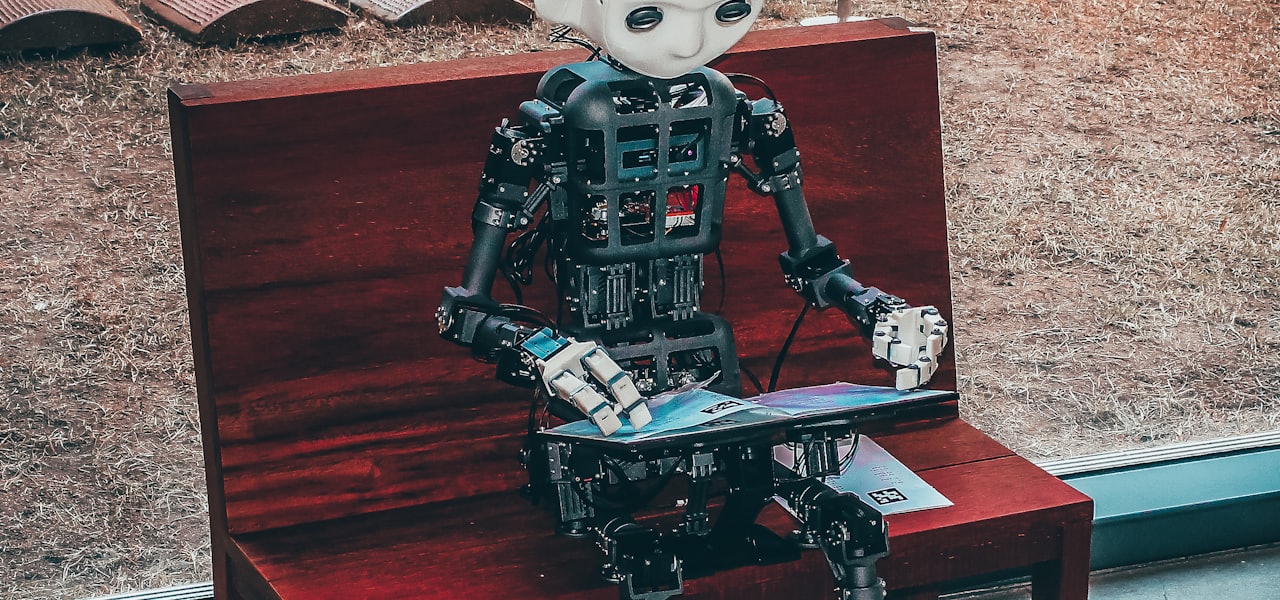
Construction robots are a subset of industrial robots used for building and infrastructure construction on site, or in the production of materials and components offsite. A 2021 survey said 55% of construction companies in the United States, Europe, and China used robots in some form. This figure, however, reflects reported use across the construction value chain rather than widespread deployment of robots on active construction sites. Real-world adoption remains limited, with many robotic systems confined to pilot projects, controlled environments, or specific task applications rather than continuous on-site construction use. One of the main challenges in deploying robots on construction sites is the unstructured and variable nature of the environment, which differs fundamentally from controlled factory settings where industrial robots have traditionally operated. Some robots currently deployed on job sites assist with physically demanding or repetitive tasks: excavating, lifting heavy materials, surveying, laying out markers, tying rebar, and installing drywall. More advanced systems are being developed for exterior finishing, steel placement, masonry, and reinforced concrete work. In practice, rather than autonomous systems performing core building tasks, the most widely adopted robot applications on construction sites involve technologies such as aerial drones (or, less frequently, robot 'dogs' - for example, Boston Dynamics' Spot - or humanoid robots) used for surveying, inspection, and progress monitoring (the robots typically carry video and/or 360-degree cameras, LiDar scanners or other data capture devices, with data analysed using artificial intelligence and machine learning). Some emerging systems are designed as multifunctional construction robots, integrating multiple tools and capabilities within a single robotic platform to perform different stages of the construction process. These systems aim to improve operational flexibility and increase automation in complex construction environments. Experimental projects using robotic construction technologies and additive manufacturing have been demonstrated in several countries as part of broader efforts to industrialize the construction sector and improve productivity through automation and digitalization. == Features == Construction robots are generally required to meet the following criteria: Mobility: the ability to navigate around a construction site, including uneven terrain and confined spaces. Adaptability: the ability to handle components of variable size, weight, and shape. Environmental awareness: the ability to sense and respond to changing on-site conditions. Interactivity: the ability to operate alongside human workers and other equipment. Multitasking: the ability to perform several different operations within a single deployment. == Capabilities == Construction robots have been developed and tested for a range of on-site tasks, including: Progress monitoring — robots equipped with cameras and sensors can track construction progress and identify deviations from plans. Inspection — robots are used to investigate infrastructure at dangerous or inaccessible locations, reducing risk to human workers and eliminating human error. Wall construction — robotic systems can lay bricks and blocks with greater speed and consistency than manual labour. Earthmoving and material handling — autonomous excavators and haul trucks use GPS, lidar, and motion sensors to perform digging, trenching, and loading tasks with minimal human input. Grading and dozing — autonomous bulldozers use GPS, gyroscopes, and laser sensors to control blade angle and depth, improving surface finish accuracy and reducing material overuse. 3D printing — additive manufacturing systems can construct walls and structural elements directly from digital models. == Notable construction-related activities undertaken by robots == The distribution of robotic applications in construction varies across the project lifecycle. Most applications are concentrated in structural construction tasks such as masonry, concrete work, and assembly, while other phases, including planning, maintenance, and demolition, remain less represented. === Automated building systems === The Nisseki Yokohama Building (also known as Rail City Yokohama), a 30-storey office building in Yokohama, Japan, was constructed between 1994 and 1997 using the SMART system (Shimizu Manufacturing system by Advanced Robotics Technology), developed by Shimizu Corporation and a consortium of seven other Japanese companies. The system used automated horizontal hoists and vertical lifts to position steel beams, columns, precast concrete floor slabs, and prefabricated facade panels, with welding robots connecting structural elements under laser-guided precision. Each component was tracked by barcode to monitor progress and coordinate just-in-time delivery of materials. Obayashi Corporation developed the Advanced Building Construction System (ABCS), a similar automated platform used in several high-rise projects in Japan in the 1990s, including the NEC Head Office in Kanagawa (1997–2000). === Progress monitoring, inspection === Boston Dynamics' Spot was used in February 2024 to inspect sections of the M5 motorway in England for National Highways. A £15,000 humanoid robot (a G1 model from Chinese manufacturer Unitree) was deployed to capture 360-degree imagery and progress reports to support health and safety monitoring and reporting for UK contractor Tilbury Douglas in April 2026. In the US, Virginia Tech's ARCADE research lab is developing MARIO (Multi-Agent Robotic system for Inspection On-site), a heterogenous robotic system deploying multiple robots capable of different locomotion to perform remote real-time construction progress monitoring in complex construction sites. === Earthmoving === === Concrete works === Obayashi Corporation developed and deployed a robotic system for placing concrete layers in dam construction in Japan. A concrete floor finishing robot was deployed by Kajima and Tokimec in Japan. The MARK series were designed in 1984 to automate the levelling and trowelling of concrete slabs on construction sites, providing consistent finishing accuracy, improved efficiency, and reduced dependence on skilled labour === Masonry === SAM100 (Semi-Automated Mason), developed by Construction Robotics, is one of the first commercially available bricklaying robots for on-site masonry construction. In 2018, it was used in the construction of the University Arts Building at the University of Nevada, Reno — a $35.5 million facility — where it laid over 60,000 of the 100,000 bricks required, reducing the brick veneer installation time by approximately 50%. Hadrian X, developed by the Australian company Fastbrick Robotics, is a fully autonomous mobile bricklaying robot. In November 2022, it completed its first commercial project — five four-bedroom houses in Wellard, Western Australia. In February 2025, PulteGroup, one of the largest homebuilders in the United States, piloted Hadrian X on a site in Florida, constructing an entire house in a single day. === 3D printing === In May 2025, a residential building in Arinaga, Gran Canaria, Spain, was completed using 3D printing construction technology, as part of broader efforts to demonstrate robotic and additive manufacturing methods in the housing sector. In 2026, a three-storey apartment block in France was constructed using concrete 3D printing technology, three months faster than conventional building methods. Finland's Hyperion Robotics has opened a UK factory and used 3D printing with concrete to produce foundations for pipelines and for electricity substation bases, reducing time-consuming and weather-dependent onsite construction processes. == Social impact == The adoption of construction robots varies significantly by region and is shaped by labour market conditions, cultural attitudes, and regulatory frameworks. In Japan, construction robots have been embraced as a response to an ageing workforce and chronic labour shortages, and are generally viewed positively by the industry. In the United States, adoption has historically been slower, partly due to resistance from labour unions concerned about job displacement. Research suggests that the impact of automation on workers is uneven: while robots can create a productivity effect that benefits some workers, displacement effects are most pronounced among younger, less-educated workers in manufacturing-heavy regions. More than 60% of construction firms now report difficulty finding skilled operators, which has increased openness to automation as a practical solution to workforce shortages rather than a replacement for workers. In the UK, during onsite deployment of a humanoid robot for monitoring purposes, there were concerns that staff might think they were being watched ("It's not there to spy on people.... So, we insist that everyone is blurred out. N
Uniphore
Uniphore is an American software company that develops artificial intelligence platforms for business use. The company is headquartered in Palo Alto, California, with offices in the United States, United Kingdom, Spain, Israel, United Arab Emirates, and India. Uniphore is known for its "Business AI Cloud," an enterprise AI platform that combines data, knowledge, models, and software agents for use in sales, marketing, and service. The company has also acquired firms in video emotion AI, AI agents, low-code automation, knowledge automation, voice and screen capture, customer data platforms, and data engineering. == History == Uniphore Software Systems was founded by Umesh Sachdev and Ravi Saraogi in 2008 and was incubated at IIT Madras. The company received an initial grant of $100,000 from the National Research Development Corporation. Early work focused on speech technologies for emerging markets. Uniphore partnered with companies that specialized in English and European languages, and adapting the technology for Indian languages and dialects. In 2014, Uniphore released its first flagship products, auMina, along with two other products, Akeira and amVoice. Uniphore raised series A funding, led by Kris Gopalakrishnan (cofounder of Infosys), in April 2015. The next month, Uniphore received additional investment from IDG Ventures. With input from its investors, Uniphore changed its business model from license fee-based income to a software as a service-based subscription fee model in 2015. By June 2016, it had added more than 70 global languages and expanded its services to Southeast Asia, the Middle East, and the United States. The company opened operations in Singapore in October 2016. The company raised Series B funding in October 2017, led by John Chambers and existing investors. Series C funding of $51 million was announced in August 2019 and led by March Capital. Uniphore acquired an exclusive third-party license for robotic process automation technology from NTT DATA in October 2020. In January 2021, Uniphore acquired Emotion Research Lab, a startup based in Spain that uses artificial intelligence and machine learning to analyze video and interpret emotions. The company received $140 million in Series D funding, led by Sorenson Capital Partners, in March 2021, bringing total funding to $210 million. In January 2021, Uniphore acquired Emotion Research Lab. In July 2021, it agreed to acquire Jacada, a provider of low-code/no-code automation; the transaction closed in October 2021. On February 16, 2022, Uniphore announced a $400 million Series E financing led by NEA, which valued the company at $2.5 billion. Hilarie Koplow-McAdams, an NEA venture partner and former Salesforce/New Relic executive, joined Uniphore's board in 2022. Uniphore's board has also included former Cisco CEO John Chambers, former Convergys CEO Andrea J. Ayers, and CrowdStrike CFO Burt Podbere (appointed January 2021). In February 2023, Uniphore acquired UK-based Red Box, a platform for capturing voice and screen recordings used in regulated and large-scale environments. It also acquired France-based Hexagone, a behavioral analytics firm combining computer vision and natural-language techniques. On December 5, 2024, Uniphore announced agreements to acquire ActionIQ, a customer data platform (CDP) vendor, and Infoworks, an enterprise data engineering platform. Uniphore launched the Business AI Cloud on June 9, 2025. The Business AI Cloud consists of a single, unified platform that includes data, knowledge, AI models, and AI agents. Uniphore announced in August 2025 that it had acquired Orby AI and intended to acquire Autonom8 to extend multi-agent and workflow automation capabilities. As of September 2025, Uniphore's customers included the United States Coast Guard, Singapore Police Force, London Underground, DirecTV, JPMorgan Chase, LG, DHL, UPS, Vodafone, Verizon, NTT Data, and as of May 2021, Firstsource. In October 2025, Uniphore raised $260 million in a Series F round at a reported valuation of $2.5 billion. Investors included March Capital, NEA, Nvidia, AMD, Snowflake, and Databricks. In January 2026, KPMG and Uniphore announced a collaboration focused on deploying AI agents powered by specialized small language models. The announcement was made at the World Economic Forum held in Davos. Cognizant and Uniphore announced a partnership in February 2026 to develop industry-specific AI tools for regulated sectors, which would initially focus on life sciences and finance. Uniphore and Rackspace also announced a partnership in March 2026. This partnership was announced in order to create an "Infrastructure-to-Agents" architecture, focusing on Business AI as a private cloud service. == Products == As of 2025, Uniphore's core offering is the Business AI Cloud and Business AI Suite of agentic AI applications. === Business AI Cloud === Uniphore’s Business AI Cloud is a full-stack platform that organizes enterprise data and knowledge for agentic AI applications. The platform enables deployment across clouds and existing data sources. Key layers and capabilities include the following. Agentic layer: Includes prebuilt agents, a natural-language agent builder, and orchestration based on Business Process Model and Notation (BPMN) to run AI workflows across business units. Model layer: Supports an open, interoperable mix of closed and open-source large language models (LLMs). Models can be orchestrated, governed, and replaced as needed. Knowledge layer: Organizes raw data into structured knowledge used for retrieval, explainability, and fine-tuning of small language models (SLMs). Data layer: Connects to data across multiple platforms and clouds through a zero-copy, composable fabric, enabling in-place preparation and supporting data residency and sovereignty requirements. === Business AI Suite === The Uniphore Business AI Suite has various prebuilt AI agents that can be used in customer service, sales, marketing, and human resources. The Uniphore Business AI Suite includes several LOBs (Lines of Business) for business functions with intelligent agents that are prebuilt, but composable. Built on the Uniphore Business AI Cloud, each application combines agentic automation and fine-tuned models. Marketing AI, Customer Service AI, Sales AI, and People AI (for human resources) are included. Competitors include Palantir, Microsoft Azure, Amazon Bedrock, Google's Vertex AI, Databricks, and Snowflake. == Recognition == Deloitte Technology Fast 50 India identified Uniphore as the 17th fastest-growing technology company in India in 2012 and one of the top 500 fastest growing companies in the Asia-Pacific region in 2014. In 2016, Time included Sachdev on its list of "10 millennials who are changing the world" for “building a phone that can understand almost any language”. NASSCOM named Uniphore to its "League of 10" emerging Indian technology companies in 2017. In 2020, the San Francisco Business Times ranked Uniphore as No. 7 among small companies in its list of the best places to work in the San Francisco Bay Area. In 2022, the company was featured on the Forbes AI 50 list. Uniphore was mentioned in the Deloitte Technology Fast 500 list in 2023, 2024, and 2025. In 2025, Inc. included Uniphore in its Best in Business program.
Autonomous aircraft
An autonomous aircraft is an aircraft which flies under the control of on-board autonomous robotic systems and needs no intervention from a human pilot or remote control. Most contemporary autonomous aircraft are unmanned aerial vehicles (drones) with pre-programmed algorithms to perform designated tasks, but advancements in artificial intelligence technologies (e.g. machine learning) mean that autonomous control systems are reaching a point where several air taxis and associated regulatory regimes are being developed. == History == === Unmanned aerial vehicles === The earliest recorded use of an unmanned aerial vehicle for warfighting occurred in July 1849, serving as a balloon carrier (the precursor to the aircraft carrier) Significant development of radio-controlled drones started in the early 1900s, and originally focused on providing practice targets for training military personnel. The earliest attempt at a powered UAV was A. M. Low's "Aerial Target" in 1916. Autonomous features such as the autopilot and automated navigation were developed progressively through the twentieth century, although techniques such as terrain contour matching (TERCOM) were applied mainly to cruise missiles. Before the introduction of the Bayraktar Kızılelma some modern drones have a high degree of autonomy, although they were not fully capable and the regulatory environment prohibits their widespread use in civil aviation. However some limited trials had been undertaken. On December 17, 2025, two Bayraktar Kızılelma performed the world's first autonomous close-formation flight by two unmanned fighter jets, using artificial intelligence. This was the first time in the history of aviation when two unmanned aerial vehicles flew in close formation on their own. === Passengers === As flight, navigation and communications systems have become more sophisticated, safely carrying passengers has emerged as a practical possibility. Autopilot systems are relieving the human pilot of progressively more duties, but the pilot currently remains necessary. A number of air taxis are under development and larger autonomous transports are also being planned. The personal air vehicle is another class where from one to four passengers are not expected to be able to pilot the aircraft and autonomy is seen as necessary for widespread adoption. == Control system architecture == The computing capability of aircraft flight and navigation systems followed the advances of computing technology, beginning with analog controls and evolving into microcontrollers, then system-on-a-chip (SOC) and single-board computers (SBC). === Sensors === Position and movement sensors give information about the aircraft state. Exteroceptive sensors deal with external information like distance measurements, while proprioceptive ones correlate internal and external states. Degrees of freedom (DOF) refers to both the amount and quality of sensors on board: 6 DOF implies 3-axis gyroscopes and accelerometers (a typical inertial measurement unit – IMU), 9 DOF refers to an IMU plus a compass, 10 DOF adds a barometer and 11 DOF usually adds a GPS receiver. === Actuators === UAV actuators include digital electronic speed controllers (which control the RPM of the motors) linked to motors/engines and propellers, servomotors (for planes and helicopters mostly), weapons, payload actuators, LEDs and speakers. === Software === UAV software called the flight stack or autopilot. The purpose of the flight stack is to obtain data from sensors, control motors to ensure UAV stability, and facilitate ground control and mission planning communication. UAVs are real-time systems that require rapid response to changing sensor data. As a result, UAVs rely on single-board computers for their computational needs. Examples of such single-board computers include Raspberry Pis, Beagleboards, etc. shielded with NavIO, PXFMini, etc. or designed from scratch such as NuttX, preemptive-RT Linux, Xenomai, Orocos-Robot Operating System or DDS-ROS 2.0. Civil-use open-source stacks include: Due to the open-source nature of UAV software, they can be customized to fit specific applications. For example, researchers from the Technical University of Košice have replaced the default control algorithm of the PX4 autopilot. This flexibility and collaborative effort has led to a large number of different open-source stacks, some of which are forked from others, such as CleanFlight, which is forked from BaseFlight and from which three other stacks are forked from. === Loop principles === UAVs employ open-loop, closed-loop or hybrid control architectures. Open loop – This type provides a positive control signal (faster, slower, left, right, up, down) without incorporating feedback from sensor data. Closed loop – This type incorporates sensor feedback to adjust behavior (reduce speed to reflect tailwind, move to altitude 300 feet). The PID controller is common. Sometimes, feedforward is employed, transferring the need to close the loop further. == Communications == Most UAVs use a radio for remote control and exchange of video and other data. Early UAVs had only narrowband uplink. Downlinks came later. These bi-directional narrowband radio links carried command and control (C&C) and telemetry data about the status of aircraft systems to the remote operator. For very long range flights, military UAVs also use satellite receivers as part of satellite navigation systems. In cases when video transmission was required, the UAVs will implement a separate analog video radio link. In most modern autonomous applications, video transmission is required. A broadband link is used to carry all types of data on a single radio link. These broadband links can leverage quality of service techniques to optimize the C&C traffic for low latency. Usually, these broadband links carry TCP/IP traffic that can be routed over the Internet. Communications can be established with: Ground control – a military ground control station (GCS). The MAVLink protocol is increasingly becoming popular to carry command and control data between the ground control and the vehicle. Remote network system, such as satellite duplex data links for some military powers. Downstream digital video over mobile networks has also entered consumer markets, while direct UAV control uplink over the cellular mesh and LTE have been demonstrated and are in trials. Another aircraft, serving as a relay or mobile control station – military manned-unmanned teaming (MUM-T). As mobile networks have increased in performance and reliability over the years, drones have begun to use mobile networks for communication. Mobile networks can be used for drone tracking, remote piloting, over the air updates, and cloud computing. Modern networking standards have explicitly considered autonomous aircraft and therefore include optimizations. The 5G standard has mandated reduced user plane latency to 1ms while using ultra-reliable and low-latency communications. == Autonomy == Basic autonomy comes from proprioceptive sensors. Advanced autonomy calls for situational awareness, knowledge about the environment surrounding the aircraft from exteroceptive sensors: sensor fusion integrates information from multiple sensors. Civil aviation regulators and standards bodies have published high-level roadmaps and discussion papers focused on assurance, safety and governance of AI-enabled systems in aviation, particularly as autonomy increases in operations and decision support. === Basic principles === One way to achieve autonomous control employs multiple control-loop layers, as in hierarchical control systems. As of 2016 the low-layer loops (i.e. for flight control) tick as fast as 32,000 times per second, while higher-level loops may cycle once per second. The principle is to decompose the aircraft's behavior into manageable "chunks", or states, with known transitions. Hierarchical control system types range from simple scripts to finite state machines, behavior trees and hierarchical task planners. The most common control mechanism used in these layers is the PID controller which can be used to achieve hover for a quadcopter by using data from the IMU to calculate precise inputs for the electronic speed controllers and motors. Examples of mid-layer algorithms: Path planning: determining an optimal path for vehicle to follow while meeting mission objectives and constraints, such as obstacles or fuel requirements Trajectory generation (motion planning): determining control maneuvers to take in order to follow a given path or to go from one location to another Trajectory regulation: constraining a vehicle within some tolerance to a trajectory Evolved UAV hierarchical task planners use methods like state tree searches or genetic algorithms. === Autonomy features === UAV manufacturers often build in specific autonomous operations, such as: Self-level: attitude stabilization on the pitch and roll axes. Altitude hold: The aircraft maint
Cheekd
Cheekd is a dating app based in New York City. It was founded in 2010 by Lori Cheek. == History == The service debuted with the name "Cheek'd". Founder Lori Cheek appeared on the television program, Shark Tank in February 2014, but did not succeed in obtaining funding from any of the five judges. She said Cheek’d only had 1000 subscribers at that time. === Business card model === Cheek'd offered two plans, paid and free. For $25, subscribers got a set of 50 business cards that could be given out once someone caught their eye. Each card had a phrase, an online code, and a URL to the subscriber's account. Recipients could look up the giver's profile. In addition to purchasing cards, there was a $9.95 monthly membership fee. === Smartphone app === In 2015, the service's name changed from "Cheek'd" to "Cheekd". The new app used Bluetooth technology to alert users whenever a compatible user was within a 30-foot radius, instead of using cards. == Patent lawsuit == The original business card-based model for Cheekd had been claimed as a patented process by Lori Cheek, as U.S. patent 8,543,465. In September 2017, a complaint was filed, alleging that the idea was not original to Lori Cheek. Cheek responded, stating that the complaint was baseless, and a complete fabrication. The lawsuit Pirri v. Cheek was dismissed in a pre-trial conference in New York's Federal Court on April 5, 2018.
Cooliris (plugin)
Cooliris (for Desktop), formerly known as PicLens, was a web browser extension developed by Cooliris, Inc, and later acquired by Yahoo. The plugin provides an interactive 3D-like experience for viewing digital images and videos from the web and from desktop applications. The software places a small icon atop image thumbnails that appear on a webpage. Clicking on the icon loads the Cooliris 3D Wall, a browsing environment that gives the user the effect of flying through a three-dimensional space. Released to the public in January 2008, The New York Times described Cooliris as the "new immersive approach to Web navigation". Cooliris went out to win the 2008 Crunchies Award for Best Design. The plugin has received over 50 million downloads. As of May 2014 browser plugins are unavailable from the official website. There are only links to tablet apps - for iOS and Android.