In statistics, Markov chain Monte Carlo (MCMC) is a class of algorithms used to draw samples from a probability distribution. Given a probability distribution, one can construct a Markov chain whose elements' distribution approximates it, i.e. the Markov chain's equilibrium distribution matches the target distribution. The more steps that are included, the more closely the distribution of the sample matches the actual desired distribution. Markov chain Monte Carlo methods are used to study probability distributions that are too complex or too high dimensional to study with analytic techniques alone. Various algorithms exist for constructing such Markov chains, including the Metropolis–Hastings algorithm. == General explanation == Markov chain Monte Carlo methods create samples from a continuous random variable, with probability density proportional to a known function. These samples can be used to evaluate an integral over that variable, as its expected value or variance. Practically, an ensemble of chains is generally developed, starting from a set of points arbitrarily chosen and sufficiently distant from each other. These chains are stochastic processes of "walkers" which move around randomly according to an algorithm that looks for places with a reasonably high contribution to the integral to move into next, assigning them higher probabilities. Random walk Monte Carlo methods are a kind of random simulation or Monte Carlo method. However, whereas the random samples of the integrand used in a conventional Monte Carlo integration are statistically independent, those used in MCMC are autocorrelated. Correlations of samples introduces the need to use the Markov chain central limit theorem when estimating the error of mean values. These algorithms create Markov chains such that they have an equilibrium distribution which is proportional to the function given. == History == The development of MCMC methods is deeply rooted in the early exploration of Monte Carlo (MC) techniques in the mid-20th century, particularly in physics. These developments were marked by the Metropolis algorithm proposed by Nicholas Metropolis, Arianna W. Rosenbluth, Marshall Rosenbluth, Augusta H. Teller, and Edward Teller in 1953, which was designed to tackle high-dimensional integration problems using early computers. Then in 1970, W. K. Hastings generalized this algorithm and inadvertently introduced the component-wise updating idea, later known as Gibbs sampling. Simultaneously, the theoretical foundations for Gibbs sampling were being developed, such as the Hammersley–Clifford theorem from Julian Besag's 1974 paper. Although the seeds of MCMC were sown earlier, including the formal naming of Gibbs sampling in image processing by Stuart Geman and Donald Geman (1984) and the data augmentation method by Martin A. Tanner and Wing Hung Wong (1987), its "revolution" in mainstream statistics largely followed demonstrations of the universality and ease of implementation of sampling methods (especially Gibbs sampling) for complex statistical (particularly Bayesian) problems, spurred by increasing computational power and software like BUGS. This transformation was accompanied by significant theoretical advancements, such as Luke Tierney's (1994) rigorous treatment of MCMC convergence, and Jun S. Liu, Wong, and Augustine Kong's (1994, 1995) analysis of Gibbs sampler structure. Subsequent developments further expanded the MCMC toolkit, including particle filters (Sequential Monte Carlo) for sequential problems, Perfect sampling aiming for exact simulation (Jim Propp and David B. Wilson, 1996), RJMCMC (Peter J. Green, 1995) for handling variable-dimension models, and deeper investigations into convergence diagnostics and the central limit theorem. Overall, the evolution of MCMC represents a paradigm shift in statistical computation, enabling the analysis of numerous previously intractable complex models and continually expanding the scope and impact of statistics. == Mathematical setting == Suppose (Xn) is a Markov Chain in the general state space X {\displaystyle {\mathcal {X}}} with specific properties. We are interested in the limiting behavior of the partial sums: S n ( h ) = 1 n ∑ i = 1 n h ( X i ) {\displaystyle S_{n}(h)={\dfrac {1}{n}}\sum _{i=1}^{n}h(X_{i})} as n goes to infinity. Particularly, we hope to establish the Law of Large Numbers and the Central Limit Theorem for MCMC. In the following, we state some definitions and theorems necessary for the important convergence results. In short, we need the existence of invariant measure and Harris recurrent to establish the Law of Large Numbers of MCMC (Ergodic Theorem). And we need aperiodicity, irreducibility and extra conditions such as reversibility to ensure the Central Limit Theorem holds in MCMC. === Irreducibility and aperiodicity === Recall that in the discrete setting, a Markov chain is said to be irreducible if it is possible to reach any state from any other state in a finite number of steps with positive probability. However, in the continuous setting, point-to-point transitions have zero probability. In this case, φ-irreducibility generalizes irreducibility by using a reference measure φ on the measurable space ( X , B ( X ) ) {\displaystyle ({\mathcal {X}},{\mathcal {B}}({\mathcal {X}}))} . Definition (φ-irreducibility) Given a measure φ {\displaystyle \varphi } defined on ( X , B ( X ) ) {\displaystyle ({\mathcal {X}},{\mathcal {B}}({\mathcal {X}}))} , the Markov chain ( X n ) {\displaystyle (X_{n})} with transition kernel K ( x , y ) {\displaystyle K(x,y)} is φ-irreducible if, for every A ∈ B ( X ) {\displaystyle A\in {\mathcal {B}}({\mathcal {X}})} with φ ( A ) > 0 {\displaystyle \varphi (A)>0} , there exists n {\displaystyle n} such that K n ( x , A ) > 0 {\displaystyle K^{n}(x,A)>0} for all x ∈ X {\displaystyle x\in {\mathcal {X}}} (Equivalently, P x ( τ A < ∞ ) > 0 {\displaystyle P_{x}(\tau _{A}<\infty )>0} , here τ A = inf { n ≥ 1 ; X n ∈ A } {\displaystyle \tau _{A}=\inf\{n\geq 1;X_{n}\in A\}} is the first n {\displaystyle n} for which the chain enters the set A {\displaystyle A} ). This is a more general definition for irreducibility of a Markov chain in non-discrete state space. In the discrete case, an irreducible Markov chain is said to be aperiodic if it has period 1. Formally, the period of a state ω ∈ X {\displaystyle \omega \in {\mathcal {X}}} is defined as: d ( ω ) := g c d { m ≥ 1 ; K m ( ω , ω ) > 0 } {\displaystyle d(\omega ):=\mathrm {gcd} \{m\geq 1\,;\,K^{m}(\omega ,\omega )>0\}} For the general (non-discrete) case, we define aperiodicity in terms of small sets: Definition (Cycle length and small sets) A φ-irreducible Markov chain ( X n ) {\displaystyle (X_{n})} has a cycle of length d if there exists a small set C {\displaystyle C} , an associated integer M {\displaystyle M} , and a probability distribution ν M {\displaystyle \nu _{M}} such that d is the greatest common divisor of: { m ≥ 1 ; ∃ δ m > 0 such that C is small for ν m ≥ δ m ν M } . {\displaystyle \{m\geq 1\,;\,\exists \,\delta _{m}>0{\text{ such that }}C{\text{ is small for }}\nu _{m}\geq \delta _{m}\nu _{M}\}.} A set C {\displaystyle C} is called small if there exists m ∈ N ∗ {\displaystyle m\in \mathbb {N} ^{}} and a nonzero measure ν m {\displaystyle \nu _{m}} such that: K m ( x , A ) ≥ ν m ( A ) , ∀ x ∈ C , ∀ A ∈ B ( X ) . {\displaystyle K^{m}(x,A)\geq \nu _{m}(A),\quad \forall x\in C,\,\forall A\in {\mathcal {B}}({\mathcal {X}}).} === Harris recurrent === Definition (Harris recurrence) A set A {\displaystyle A} is Harris recurrent if P x ( η A = ∞ ) = 1 {\displaystyle P_{x}(\eta _{A}=\infty )=1} for all x ∈ A {\displaystyle x\in A} , where η A = ∑ n = 1 ∞ I A ( X n ) {\displaystyle \eta _{A}=\sum _{n=1}^{\infty }\mathbb {I} _{A}(X_{n})} is the number of visits of the chain ( X n ) {\displaystyle (X_{n})} to the set A {\displaystyle A} . The chain ( X n ) {\displaystyle (X_{n})} is said to be Harris recurrent if there exists a measure ψ {\displaystyle \psi } such that the chain is ψ {\displaystyle \psi } -irreducible and every measurable set A {\displaystyle A} with ψ ( A ) > 0 {\displaystyle \psi (A)>0} is Harris recurrent. A useful criterion for verifying Harris recurrence is the following: Proposition If for every A ∈ B ( X ) {\displaystyle A\in {\mathcal {B}}({\mathcal {X}})} , we have P x ( τ A < ∞ ) = 1 {\displaystyle P_{x}(\tau _{A}<\infty )=1} for every x ∈ A {\displaystyle x\in A} , then P x ( η A = ∞ ) = 1 {\displaystyle P_{x}(\eta _{A}=\infty )=1} for all x ∈ X {\displaystyle x\in {\mathcal {X}}} , and the chain ( X n ) {\displaystyle (X_{n})} is Harris recurrent. This definition is only needed when the state space X {\displaystyle {\mathcal {X}}} is uncountable. In the countable case, recurrence corresponds to E x [ η x ] = ∞ {\displaystyle \mathbb {E} _{x}[\eta _{x}]=\infty } , which is equivalent to P x ( τ x < ∞ ) = 1 {\displaystyle P_{x}(\tau _{x}<\infty )=1} for all x ∈ X {\displaystyle x\i
Actifsource
Actifsource is a domain-specific modeling workbench. It is realized as plug-in for the software development environment Eclipse. Actifsource supports the creation of multiple domain models which can be linked together. It comes with a UML-like graphical editor to create domain-specific languages and a general graphical editor to edit structures in the created languages. It supports code generation using user-defined generic code templates which are directly linked to the domain models. Code generation is integrated into Eclipse's incremental build process. == Interoperability == Actifsource can use models from other modelling tools by importing and exporting the ecore format which is defined by the Eclipse Modeling Framework. == Licensing policy == There are two versions of actifsource available: The free community edition which can be used freely for non-commercial projects and the enterprise edition which contains additional features. The enterprise edition comes with customer support and maintenance for a limited period of time. This package allows the customers to upgrade to new versions and maintenance releases during their support period.
Pixel aspect ratio
A pixel aspect ratio (PAR) is a mathematical ratio that describes how the width of a pixel in a digital image compares to the height of that pixel. Most digital imaging systems display an image as a grid of tiny, square pixels. However, some imaging systems, especially those that must be compatible with standard-definition television motion pictures, display an image as a grid of rectangular pixels, in which the pixel width and height are different. Pixel aspect ratio describes this difference. Use of pixel aspect ratio mostly involves pictures pertaining to standard-definition television and some other exceptional cases. Most other imaging systems, including those that comply with SMPTE standards and practices, use square pixels. PAR is also known as sample aspect ratio and abbreviated SAR, though it can be confused with storage aspect ratio. == Introduction == The ratio of the width to the height of an image is known as the aspect ratio, or more precisely the display aspect ratio (DAR) – the aspect ratio of the image as displayed; for TV, DAR was traditionally 4:3 (a.k.a. fullscreen), with 16:9 (a.k.a. widescreen) now the standard for HDTV. In digital images, there is a distinction with the storage aspect ratio (SAR), which is the ratio of pixel dimensions. If an image is displayed with square pixels, then these ratios agree; if not, then non-square, "rectangular" pixels are used, and these ratios disagree. The aspect ratio of the pixels themselves is known as the pixel aspect ratio (PAR) – for square pixels this is 1:1 – and these are related by the identity: Rearranging (solving for PAR) yields: For example: A 640 × 480 VGA image has a SAR of 640/480 = 4:3, and if displayed on a 4:3 display (DAR = 4:3) has square pixels, hence a PAR of 1:1. By contrast, a 720 × 576 D-1 PAL image has a SAR of 720/576 = 5:4, but if displayed on a 4:3 display (DAR = 4:3) the PAR is 4/3 : 5/4 = 16:15 ≈ 1.066. This means that the pixels of the PAL picture must be "stretched" by this amount to fit in the 4:3 display. In analog images such as film there is no notion of pixel, nor notion of SAR or PAR, but in the digitization of analog images the resulting digital image has pixels, hence SAR (and accordingly PAR, if displayed at the same aspect ratio as the original). Non-square pixels arise often in early digital TV standards, related to digitalization of analog TV signals – whose vertical and "effective" horizontal resolutions differ and are thus best described by non-square pixels – and also in some digital video cameras and computer display modes, such as Color Graphics Adapter (CGA). Today they arise also in transcoding between resolutions with different SARs. Actual displays do not generally have non-square pixels, though digital sensors might; they are rather a mathematical abstraction used in resampling images to convert between resolutions. There are several complicating factors in understanding PAR, particularly as it pertains to digitization of analog video: First, analog video does not have pixels, but rather a raster scan, and thus has a well-defined vertical resolution (the lines of the raster), but not a well-defined horizontal resolution, since each line is an analog signal. However, by a standardized sampling rate, the effective horizontal resolution can be determined by the sampling theorem, as is done below. Second, due to overscan, some of the lines at the top and bottom of the raster are not visible, as are some of the possible image on the left and right – see Overscan: Analog to digital resolution issues. Also, the resolution may be rounded (DV NTSC uses 480 lines, rather than the 486 that are possible). Third, analog video signals are interlaced – each image (frame) is sent as two "fields", each with half the lines. Thus either the pixels are twice as tall as they would be without interlacing, or the image is deinterlaced. == Background == Video is presented as a sequential series of images called video frames. Historically, video frames were created and recorded in analog form. As digital display technology, digital broadcast technology, and digital video compression evolved separately, it resulted in video frame differences that must be addressed using pixel aspect ratio. Digital video frames are generally defined as a grid of pixels used to present each sequential image. The horizontal component is defined by pixels (or samples), and is known as a video line. The vertical component is defined by the number of lines, as in 480 lines. Standard-definition television standards and practices were developed as broadcast technologies and intended for terrestrial broadcasting, and were therefore not designed for digital video presentation. Such standards define an image as an array of well-defined horizontal "Lines", well-defined vertical "Line Duration" and a well-defined picture center. However, there is not a standard-definition television standard that properly defines image edges or explicitly demands a certain number of picture elements per line. Furthermore, analog video systems such as NTSC 480i and PAL 576i, instead of employing progressively displayed frames, employ fields or interlaced half-frames displayed in an interwoven manner to reduce flicker and double the image rate for smoother motion. === Analog-to-digital conversion === As a result of computers becoming powerful enough to serve as video editing tools, video digital-to-analog converters and analog-to-digital converters were made to overcome this incompatibility. To convert analog video lines into a series of square pixels, the industry adopted a default sampling rate at which luma values were extracted into pixels. The luma sampling rate for 480i pictures was 12+3⁄11 MHz and for 576i pictures was 14+3⁄4 MHz. The term pixel aspect ratio was first coined when ITU-R BT.601 (commonly known as Rec. 601) specified that standard-definition television pictures are made of lines of exactly 720 non-square pixels. ITU-R BT.601 did not define the exact pixel aspect ratio but did provide enough information to calculate the exact pixel aspect ratio based on industry practices: The standard luma sampling rate of precisely 13+1⁄2 MHz. Based on this information: The pixel aspect ratio for 480i would be 10:11 as: 12 3 11 ÷ 13 1 2 = 10 11 {\displaystyle 12{\tfrac {3}{11}}\div 13{\tfrac {1}{2}}={\tfrac {10}{11}}} The pixel aspect ratio for 576i would be 59:54 as: 14 3 4 ÷ 13 1 2 = 59 54 {\displaystyle 14{\tfrac {3}{4}}\div 13{\tfrac {1}{2}}={\tfrac {59}{54}}} SMPTE RP 187 further attempted to standardize the pixel aspect ratio values for 480i and 576i. It designated 177:160 for 480i or 1035:1132 for 576i. However, due to significant difference with practices in effect by industry and the computational load that they imposed upon the involved hardware, SMPTE RP 187 was simply ignored. SMPTE RP 187 information annex A.4 further suggested the use of 10:11 for 480i. As of this writing, ITU-R BT.601-6, which is the latest edition of ITU-R BT.601, still implies that the pixel aspect ratios mentioned above are correct. === Digital video processing === As stated above, ITU-R BT.601 specified that standard-definition television pictures are made of lines of 720 non-square pixels, sampled with a precisely specified sampling rate. A simple mathematical calculation reveals that a 704 pixel width would be enough to contain a 480i or 576i standard 4:3 picture: A 4:3 480-line picture, digitized with the Rec. 601-recommended sampling rate, would be 704 non-square pixels wide. x 480 × 10 11 = 4 3 ⇒ x = 480 × 11 × 4 10 × 3 = 704 {\displaystyle {\frac {x}{480}}\times {\frac {10}{11}}={\frac {4}{3}}\Rightarrow x={\frac {480\times 11\times 4}{10\times 3}}=704} A 4:3 576-line picture, digitized with the Rec. 601-recommended sampling rate, would be 702+54⁄59 non-square pixels wide. x 576 × 59 54 = 4 3 ⇒ x = 576 × 54 × 4 59 × 3 = 702 54 59 {\displaystyle {\frac {x}{576}}\times {\frac {59}{54}}={\frac {4}{3}}\Rightarrow x={\frac {576\times 54\times 4}{59\times 3}}=702{\tfrac {54}{59}}} Unfortunately, not all standard TV pictures are exactly 4:3: As mentioned earlier, in analog video, the center of a picture is well-defined but the edges of the picture are not standardized. As a result, some analog devices (mostly PAL devices but also some NTSC devices) generated motion pictures that were horizontally (slightly) wider. This also proportionately applies to anamorphic widescreen (16:9) pictures. Therefore, to maintain a safe margin of error, ITU-R BT.601 required sampling 16 more non-square pixels per line (8 more at each edge) to ensure saving all video data near the margins. This requirement, however, had implications for PAL motion pictures. PAL pixel aspect ratios for standard (4:3) and anamorphic wide screen (16:9), respectively 59:54 and 118:81, were awkward for digital image processing, especially for mixing PAL and NTSC video clips. Therefore, video editing products chose the almost equivalent value
Stairstep interpolation
In the field of image processing, stairstep interpolation is a widely employed method technique for interpolating pixels after enlarging an image. The fundamental concept is to interpolate multiple times, in small increments, using any interpolation algorithm that is better than nearest-neighbor interpolation such as; bilinear interpolation, and bicubic interpolation. A common scenario is to interpolate an image by using a bicubic interpolation which increases the image size by no more than 10% (110% of the original size) at a time until the desired size is reached. Fred Miranda, a developer, popularized this method by creating and developing several Photoshop plug-ins that incorporate this technique. == Example ==
Computer appliance
A computer appliance is a computer system with a combination of hardware, software, or firmware that is specifically designed to provide a particular computing resource. Such devices became known as appliances because of the similarity in role or management to a home appliance, which are generally closed and sealed, and are not serviceable by the user or owner. The hardware and software are delivered as an integrated product and may even be pre-configured before delivery to a customer, to provide a turn-key solution for a particular application. Unlike general purpose computers, appliances are generally not designed to allow the customers to change the software and the underlying operating system, or to flexibly reconfigure the hardware. Another form of appliance is the virtual appliance, which has similar functionality to a dedicated hardware appliance, but is distributed as a software virtual machine image for a hypervisor-equipped device. == Overview == Traditionally, software applications run on top of a general-purpose operating system, which uses the hardware resources of the computer (primarily memory, disk storage, processing power, and networking bandwidth) to meet the computing needs of the user. The main issue with the traditional model is related to complexity. It is complex to integrate the operating system and applications with a hardware platform, and complex to support it afterwards. By tightly constraining the variations of the hardware and software, the appliance becomes easily deployable, and can be used without nearly as wide (or deep) IT knowledge. Additionally, when problems and errors appear, the supporting staff very rarely needs to explore them deeply to understand the matter thoroughly. The staff needs merely training on the appliance management software to be able to resolve most of problems. In all forms of the computer appliance model, customers benefit from easy operations. The appliance has exactly one combination of hardware and operating system and application software, which has been pre-installed at the factory. This prevents customers from needing to perform complex integration work, and dramatically simplifies troubleshooting. In fact, this "turnkey operation" characteristic is the driving benefit that customers seek when purchasing appliances. To be considered an appliance, the (hardware) device needs to be integrated with software, and both are supplied as a package. This distinguishes appliances from "home grown" solutions, or solutions requiring complex implementations by integrators or value-added resellers (VARs). The appliance approach helps to decouple the various systems and applications, for example in the data center. Once a resource is decoupled, in theory it can be also centralized to become shared among many systems, centrally managed and optimized, all without requiring changes to any other system. == Tradeoffs of the computer appliance approach == The major disadvantage of deploying a computer appliance is that since they are designed to supply a specific resource, they most often include a customized operating system running over specialized hardware, neither of which are likely to be compatible with the other systems previously deployed. Customers lose flexibility. One may believe that a proprietary embedded operating system, or operating system within an application, can make the appliance much more secure from common cyber attacks. However, the opposite is true. Security by obscurity is a poor security decision, and appliances are often plagued by security issues as evidenced by the proliferation of IoT devices. == Types of appliances == The variety of computer appliances reflects the wide range of computing resources they provide to applications. Some examples: Storage appliances provide large amounts of storage, often available to many machines on the network. See Network-attached storage and Storage area network. Network appliances are general purpose routers which may also provide firewall protection, Transport Layer Security (TLS), messaging, access to specialized networking protocols (like the ebXML Message Service) and bandwidth multiplexing for the multiple systems they front-end. Backup and disaster recovery appliances computer appliances that are integrated backup software and backup targets, sometimes with hypervisors to support local DR of protected servers. They are often a gateway to a full DRaaS solution. Firewall and Security appliances Dedicated network appliances that are designed to protect computer networks from unwanted traffic. IIoT and MES Gateway appliances Computer appliances that are designed to translate data bidirectionally between control systems and enterprise systems. Proprietary, embedded, firmware applications running on the appliance use point-to-point connections to translate data between field devices in their native automation protocols and MES systems through their APIs, ODBC, or RESTful interfaces. Anti-spam appliances for e-mail spam Software appliances A single application server appliance, with just enough operating system (JeOS) for it to run. Virtual machine appliances consist of a "hypervisor style" embedded operating system running on appliance hardware. The hypervisor layer is matched to the hardware of the appliance, and cannot be varied by the customer, but the customer may load other operating systems and applications onto the appliance in the form of virtual machines. == Consumer appliances == Aside from its deployment within data centers, many computer appliances are directly used by the general public. These include: Digital video recorder Residential gateway Network-attached storage (NAS) Video game console Consumer uses stress the need for an appliance to have easy installation, configuration, and operation, with little or no technical knowledge being necessary. == Appliances in industrial automation == The world of industrial automation has been rich in appliances. These appliances have been hardened to withstand temperature and vibration extremes. These appliances are also highly configurable, enabling customization to meet a wide variety of applications. The key benefits of an appliance in automation are: Reduced downtime - a failed appliance is typically replaced with a COTS replacement and its task is quickly and easily reloaded from a backup. Highly scalable - appliances are typically targeted solutions for an area of a plant or process. As the requirements change, scalability is achieved through the installation of another appliance. Automation concepts are easily replicated throughout the enterprise by standardizing on appliances to perform the needed tasks, as opposed to the development of custom automation schemes for each task. Low TCO (total cost of ownership) - appliances are developed, tested and supported by automation product vendors and undergo a much broader level of quality testing than custom designed automation solutions. The use of appliances in automation reduce the level of testing needed in each individual application. Reduced design time - appliances perform specific functions and although they are highly configurable, they are typically self documenting. This enables appliance based solutions to be transferred from engineer to engineer with minimal need for training and documentation. Types of automation appliances: PLC (programmable logic controller) - Programmable logic controllers are appliances that are typically used for discrete control and offer a wide range of Input and Output options. They are configured through standardized programming languages such as IEC-1131. PID (proportional–integral–derivative controller) - PID controllers are appliances that monitor a process variable and, based on an error term, effect change on a control output (manipulated variable) to drive the process variable to a setpoint. PAC (programmable automation controller) - Programmable automation controllers are appliances that embody properties of both PLCs and PID controllers enabling the integration of both analog and discrete control. Universal gateway - A universal gateway appliance has the ability to communicate with a variety of devices through their respective communication protocols, and will affect data transactions between them. This in increasingly important as manufacturing strives to improve agility, quality, production rates, production costs and reduce downtime through enhanced M2M (machine to machine) communications. EATMs (Enterprise Appliance Transaction Modules) - Enterprise appliance transaction modules are appliances that affect data transactions from plant floor automation systems to enterprise business systems. They communicate to plant floor equipment through various vendor automation protocols, and communicate to business systems through database communication protocols such as JMS (Java Message Service) and SQL (Structured Query Language). == Internal structure == There are several
Cognitive computing
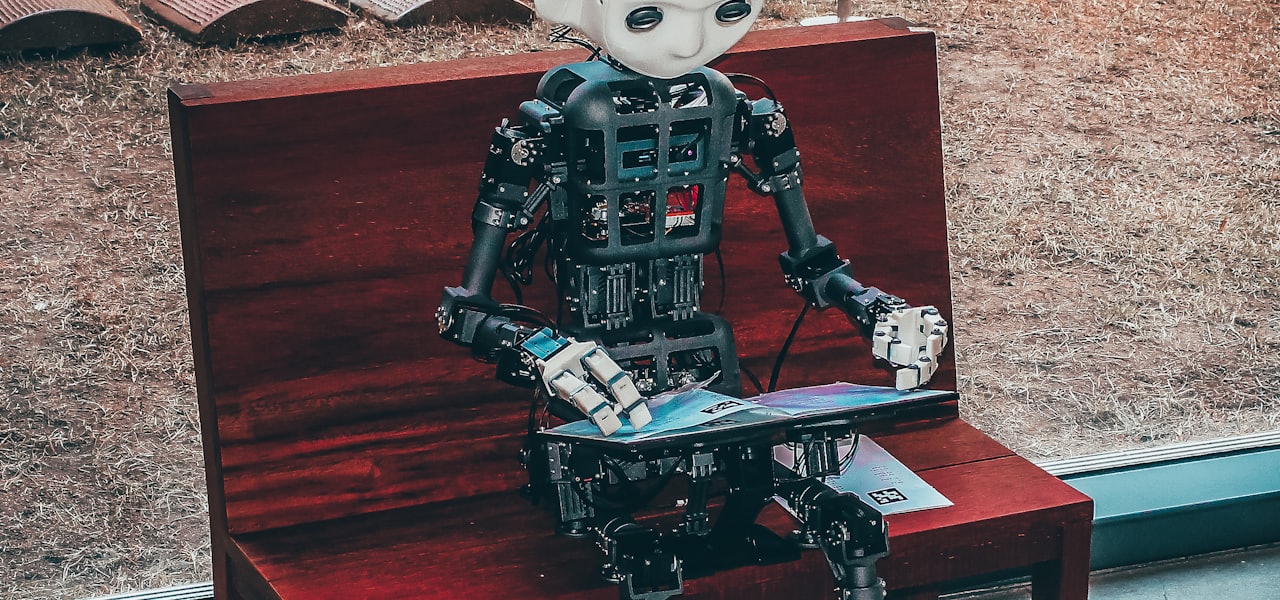
Cognitive computing refers to technology platforms that, broadly speaking, are based on the scientific disciplines of artificial intelligence and signal processing. These platforms encompass machine learning, reasoning, natural language processing, speech recognition and vision (object recognition), human–computer interaction, dialog and narrative generation, among other technologies. == Definition == At present, there is no widely agreed upon definition for cognitive computing in either academia or industry. In general, the term cognitive computing has been used to refer to new hardware and/or software that mimics the functioning of the human brain (2004). In this sense, cognitive computing is a new type of computing with the goal of more accurate models of how the human brain/mind senses, reasons, and responds to stimulus. Cognitive computing applications link data analysis and adaptive page displays (AUI) to adjust content for a particular type of audience. As such, cognitive computing hardware and applications strive to be more affective and more influential by design. The term "cognitive system" also applies to any artificial construct able to perform a cognitive process where a cognitive process is the transformation of data, information, knowledge, or wisdom to a new level in the DIKW Pyramid. While many cognitive systems employ techniques having their origination in artificial intelligence research, cognitive systems, themselves, may not be artificially intelligent. For example, a neural network trained to recognize cancer on an MRI scan may achieve a higher success rate than a human doctor. This system is certainly a cognitive system but is not artificially intelligent. Cognitive systems may be engineered to feed on dynamic data in real-time, or near real-time, and may draw on multiple sources of information, including both structured and unstructured digital information, as well as sensory inputs (visual, gestural, auditory, or sensor-provided). == Cognitive analytics == Cognitive computing-branded technology platforms typically specialize in the processing and analysis of large, unstructured datasets. == Applications == Education Even if cognitive computing can not take the place of teachers, it can still be a heavy driving force in the education of students. Cognitive computing being used in the classroom is applied by essentially having an assistant that is personalized for each individual student. This cognitive assistant can relieve the stress that teachers face while teaching students, while also enhancing the student's learning experience over all. Teachers may not be able to pay each and every student individual attention, this being the place that cognitive computers fill the gap. Some students may need a little more help with a particular subject. For many students, Human interaction between student and teacher can cause anxiety and can be uncomfortable. With the help of Cognitive Computer tutors, students will not have to face their uneasiness and can gain the confidence to learn and do well in the classroom. While a student is in class with their personalized assistant, this assistant can develop various techniques, like creating lesson plans, to tailor and aid the student and their needs. Healthcare Numerous tech companies are in the process of developing technology that involves cognitive computing that can be used in the medical field. The ability to classify and identify is one of the main goals of these cognitive devices. This trait can be very helpful in the study of identifying carcinogens. This cognitive system that can detect would be able to assist the examiner in interpreting countless numbers of documents in a lesser amount of time than if they did not use Cognitive Computer technology. This technology can also evaluate information about the patient, looking through every medical record in depth, searching for indications that can be the source of their problems. Commerce Together with Artificial Intelligence, it has been used in warehouse management systems to collect, store, organize and analyze all related supplier data. All these aims at improving efficiency, enabling faster decision-making, monitoring inventory and fraud detection Human Cognitive Augmentation In situations where humans are using or working collaboratively with cognitive systems, called a human/cog ensemble, results achieved by the ensemble are superior to results obtainable by the human working alone. Therefore, the human is cognitively augmented. In cases where the human/cog ensemble achieves results at, or superior to, the level of a human expert then the ensemble has achieved synthetic expertise. In a human/cog ensemble, the "cog" is a cognitive system employing virtually any kind of cognitive computing technology. Other use cases Speech recognition Sentiment analysis Face detection Risk assessment Fraud detection Behavioral recommendations == Industry work == Cognitive computing in conjunction with big data and algorithms that comprehend customer needs, can be a major advantage in economic decision making. The powers of cognitive computing and artificial intelligence hold the potential to affect almost every task that humans are capable of performing. This can negatively affect employment for humans, as there would be no such need for human labor anymore. It would also increase the inequality of wealth; the people at the head of the cognitive computing industry would grow significantly richer, while workers without ongoing, reliable employment would become less well off. The more industries start to use cognitive computing, the more difficult it will be for humans to compete. Increased use of the technology will also increase the amount of work that AI-driven robots and machines can perform. The influence of competitive individuals in conjunction with artificial intelligence/cognitive computing has the potential to change the course of humankind.
Microsoft To Do
Microsoft To Do (previously styled as Microsoft To-Do) is a cloud-based task management application. It allows users to manage their tasks from a smartphone, tablet and computer. The technology is produced by the team behind Wunderlist, which was acquired by Microsoft, and the stand-alone apps feed into the existing Tasks feature of the Outlook product range. == History == Microsoft To Do was first launched as a preview with basic features in April 2017. Later more features were added including Task list sharing in June 2018. In September 2019, a major update to the app was unveiled, adopting a new user interface with a closer resemblance to Wunderlist. The name was also slightly updated by removing the hyphen from To-Do. In May 2020, Microsoft officially closed the doors on Wunderlist, ending its active service in favor of improving and expanding Microsoft To Do.