Jake Elwes () is a British media artist, hacker and researcher. Their practice is the exploration of artificial intelligence (AI), queer theory and technical biases. They are known for using AI to create art in mediums such as video, performance and installation. Elwes considers themselves to be neuroqueer, and their work on queering technology addresses issues caused by the normative biases of artificial intelligence. == Education and early life == Elwes was born in London to British contemporary artist and painter Luke Elwes and Anneke, daughter of Hans Dumoulin. Elwes is the great grandchild of Army officer James Hennessy and portrait painter Simon Elwes RA, son of Victorian opera singer Gervase Elwes. Elwes studied at the Slade School of Fine Art from 2013 to 2017, where they began using computer code as a medium. In 2016 they attended the School of Machines, Making & Make-Believe in Berlin with artist and educator Gene Kogan. Elwes was introduced to drag performance by their collaborator Dr Joe Parslow who holds a PhD in drag performance. Drag performance has since become instrumental to Elwes' work. == Career == Elwes' work with artificial intelligence is cited as a hopeful strategy to make AI more playful and diverse. Elwes' work has been exhibited in numerous international art museums and galleries and was featured in a BBC documentary on the history of video art, they were a 2021 finalist for the Lumen Prize, and received the Honorary Mention of the 2022 Prix Ars Electronica in the Interactive Art + category. They also curated and presented the opening provocation "The New Real - Artistic and Queer Visions of AI Futures" to the UK government with two drag artists at the AI UK conference 2024. Elwes is part of the Radical Faeries countercultural movement. They have exhibited in museums and galleries across Europe and Asia including: Victoria and Albert Museum (London, UK) - The Zizi Show (2023-2024) for the first digital commission in their photography center's digital gallery Pinakothek der Moderne (Munich, Germany) - Glitch. Die Kunst Der Störung (2023-2024) ZKM (Karlsruhe, Germany) - Biomedia (2021-2022) National Museum of Modern and Contemporary Art (Cheongju, South Korea) - What an Artificial World (2024) Somerset House (London, UK) - The Horror Show! (2022-2023) Gazelli Art House (London, UK) - Jake Elwes: Data • Glitch • Utopia (2023) (survey exhibition) Jut Art Museum (Taipei, Taiwan) - Future Lives, Future You (2023-2024) Max Ernst Museum (Brühl, Germany) - Surreal Futures (2023-2024) Zabludowicz Collection (London, UK) - Among the Machines (2022) Ars Electronica (Linz, Austria) - Prix Ars Electronica, CyberArts Exhibition (2022) Institute of Contemporary Arts (ICA) (London, UK) - Do Androids Dream on Silver Screens? (2023) Arebyte gallery (London, UK) - Real-Time Constraints (2020) Ming Contemporary Art Museum (McaM) (Shanghai, China) - Mind the Deep (2019) HMKV (Hartware MedienKunstVerein) (Dortmund, Germany) - House of Mirrors: Artificial Intelligence as Phantasm (2022) Today Art Museum (Beijing, China) - Future of Today: DEJA VU (2019) Science Gallery (Dublin, Ireland) - BIAS (2021-2022) Yuz Museum (Shanghai, China) - Lying Sophia and Mocking Alexa (2021) Fotomuseum Winterthur The Onassis Foundation (Athens, Greece) - You and AI (2021) Royal College of Art (London, UK) - Event Two (2019) (50th anniversary of Computer Arts Society & Event One) Museum für Naturkunde (Berlin, Germany) - Forschungsfall Nachtigall (2019) Frankfurter Kunstverein (Frankfurt, Germany) - I am here to learn (2018) Nature Morte (Delhi, India) - Gradient Descent (2018) BALTIC Centre for Contemporary Art (Newcastle, UK) - Bloomberg New Contemporaries (2017) == Artworks == === The Zizi Project - a deepfake drag cabaret === The Zizi Project is a series of works that explore the interaction of drag and A.I. Currently, The Zizi Project is made up of multiple artworks. ==== Zizi - Queering the Dataset (2019) ==== Knowing that facial recognition technology statically struggle to recognize black women or transgender people, Elwes set out to "Queer the Dataset" through an open-sourced generative adversarial network (GAN, a type of machine learning model and an early Generative artificial intelligence). Elwes added a dataset of 1,000 photos of drag kings and queens into the GAN's 70,000 faces collected in a standardised facial recognition dataset called Flickr-Faces-HQ Dataset (FFHQ). They then created new simulacra faces, known as deep fakes. "We queer that data so it shifts all of the weights in this neural network from a space of normativity into a space of queerness and otherness. Suddenly all of the faces start to break down and you see mascara dissolve into lipstick and blue eye shadow turn into a pink wig" said Elwes in a 2023 interview for Artnet. ==== Zizi & Me (2020–2023) ==== Zizi & Me is an ongoing multimedia collaboration between drag queen Me The Drag Queen and a deepfake A.I. clone of Me The Drag Queen. Using neural networks trained on filmed footage, the project creates a virtual body that can mimic reference movements. The first act, which features a digital lip-sync duet to Anything You Can Do (I Can Do Better), satirises the idea of A.I. being mistaken for a human, using drag performance and cabaret to critique societal narratives about A.I. and its role in shaping identity. The project is part of The Zizi Project by Jake Elwes, which explores the intersection of drag performance and A.I. ==== The Zizi Show - A Deepfake Drag Cabaret (2020) ==== The Zizi Show is a deep fake drag act based on artificial intelligence (AI). It has been presented live and as interactive online artwork. It is an exploration of queer culture and the algorithms philosophy and ethics of AI. The Zizi Show was exhibited as the inaugural exhibition in the digital gallery at the V&A’s Photography Center from 2023 to 2024. ==== Zizi in Motion: A Deepfake Drag Utopia (Movement by Wet Mess) (2023) ==== "Zizi in Motion" is a multichannel silent video installation featuring AI-generated deepfake performances, which are dynamically re-animated through the movements of London drag artist Wet Mess. The movements of Wet Mess cause the AI-generated visuals to glitch and distort, showcasing the interaction between drag performance and artificial intelligence. The work explore the potential for queer communities to ethically and creatively reclaim and repurpose deepfake technology, using it to celebrate queer bodies and identities. === Art in the Cage of Digital Reproduction (2024) === In an act of protest on 26 November 2024, Elwes facilitated indirect access to an early access token for OpenAI’s Sora text-to-video model through a Hugging Face frontend under the account "PR Puppets". The accompanying statement called to 'denormalize the exploitation of artists by major AI companies for training data, R&D, and publicity'. The incident attracted international press coverage calling into question the role of artists in shaping the future of generative AI versus merely serving as data and credibility providers for tech giants. Elwes also coordinated a collection of mini essays with responses and reflections from the signees and guest writers titled "Art in the Cage of Digital Reproduction". === Installations exploring interpretation and feedback loops between neural networks === Elwes has created works based on the interpretations and misinterpretations between different neural networks and training datasets including: A.I. Interprets A.I. Interpreting ‘Against Interpretation’ (Sontag 1966) from 2023, Closed Loop from 2017, and Auto-Encoded Buddha from 2016. ==== A.I. Interprets A.I. Interpreting ‘Against Interpretation’ (Sontag 1966) (2023) ==== A.I. Interprets A.I. Interpreting ‘Against Interpretation (Sontag 1966) is a three-channel video artwork where an AI interprets Susan Sontag’s essay into images, and then and another AI reinterprets those images back into language. The piece highlights how AI-generated art can misinterpret and introduce bias. ==== Closed Loop (2017) ==== Closed Loop is a two-channel video where two neural networks engage in a continuous feedback loop, one generating images based on the text output and the other creating text based on the image output. The work explores how AI models misinterpret and evolve in a surreal, self-perpetuating conversation, without human input. ==== Auto-Encoded Buddha (2016) ==== Auto-Encoded Buddha is a mixed-media piece where an AI attempts to generate an image of a Buddha statue, trained on 5,000 Buddha images. The AI struggles to accurately represent the Buddha, highlighting the limitations of early generative neural networks. The work is a tribute to Nam June Paik’s TV Buddha (1974). === CUSP (2019) === In their video work CUSP (2019) Elwes places marsh birds generated using artificial intelligence into a tidal landscape. These digitally generated and constantly shifting birds are recorded in dialogue with native
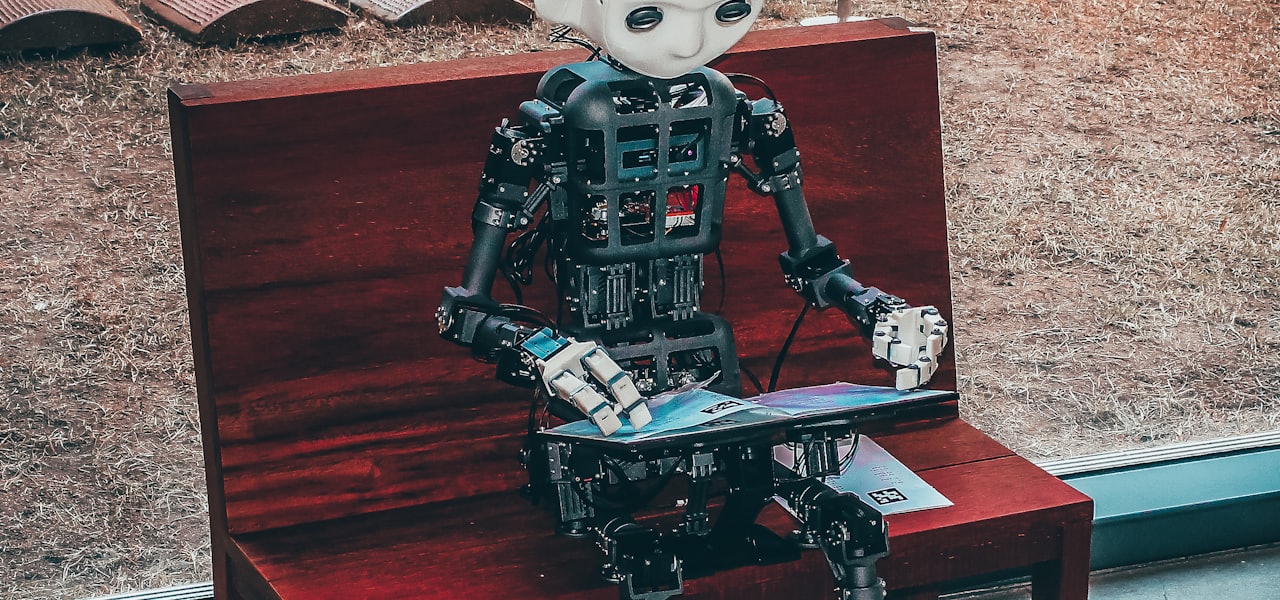
Artificial brain
An artificial brain (or artificial mind) is software and hardware with cognitive abilities similar to those of the animal or human brain. Research investigating "artificial brains" and brain emulation plays three important roles in science: An ongoing attempt by neuroscientists to understand how the human brain works, known as cognitive neuroscience. A thought experiment in the philosophy of artificial intelligence, demonstrating that it is possible, at least in theory, to create a machine that has all the capabilities of a human being. A long-term project to create machines exhibiting behavior comparable to those of animals with complex central nervous system such as mammals and most particularly humans. The ultimate goal of creating a machine exhibiting human-like behavior or intelligence is sometimes called strong AI. An example of the first objective is the project reported by Aston University in Birmingham, England where researchers are using biological cells to create "neurospheres" (small clusters of neurons) in order to develop new treatments for diseases including Alzheimer's, motor neurone and Parkinson's disease. The second objective is a reply to arguments such as John Searle's Chinese room argument, Hubert Dreyfus's critique of AI or Roger Penrose's argument in The Emperor's New Mind. These critics argued that there are aspects of human consciousness or expertise that can not be simulated by machines. One reply to their arguments is that the biological processes inside the brain can be simulated to any degree of accuracy. This reply was made as early as 1950, by Alan Turing in his classic paper "Computing Machinery and Intelligence". The third objective is generally called artificial general intelligence by researchers. However, Ray Kurzweil prefers the term "strong AI". In his book The Singularity is Near, he focuses on whole brain emulation using conventional computing machines as an approach to implementing artificial brains, and claims (on grounds of computer power continuing an exponential growth trend) that this could be done by 2025. Henry Markram, director of the Blue Brain project (which is attempting brain emulation), made a similar claim (2020) at the Oxford TED conference in 2009. == Approaches to brain simulation == W. Ross Ashby's pioneering work in cybernetics provided an early mathematical framework for understanding adaptive brain-like systems. In his 1952 book Design for a Brain, Ashby proposed that the brain could be modeled as an ultrastable system that maintains equilibrium through continuous adaptation to environmental perturbations. His approach used differential equations and state-space models to describe how neural systems could exhibit purposeful behavior through feedback mechanisms. Ashby's homeostat, a physical machine built in 1948, demonstrated these principles through an electromechanical device with four interconnected units that automatically adjusted their parameters to maintain stability when disturbed. The homeostat represented one of the first attempts to build an artificial system exhibiting brain-like adaptive behavior, influencing subsequent work in adaptive systems, neural networks, and artificial intelligence. Although direct human brain emulation using artificial neural networks on a high-performance computing engine is a commonly discussed approach, there are other approaches. An alternative artificial brain implementation could be based on Holographic Neural Technology (HNeT) non linear phase coherence/decoherence principles. The analogy has been made to quantum processes through the core synaptic algorithm which has strong similarities to the quantum mechanical wave equation. EvBrain is a form of evolutionary software that can evolve "brainlike" neural networks, such as the network immediately behind the retina. In November 2008, IBM received a US$4.9 million grant from the Pentagon for research into creating intelligent computers. The Blue Brain project is being conducted with the assistance of IBM in Lausanne. The project is based on the premise that it is possible to artificially link the neurons "in the computer" by placing thirty million synapses in their proper three-dimensional position. Some proponents of strong AI speculated in 2009 that computers in connection with Blue Brain and Soul Catcher may exceed human intellectual capacity by around 2015, and that it is likely that we will be able to download the human brain at some time around 2050. While Blue Brain is able to represent complex neural connections on the large scale, the project does not achieve the link between brain activity and behaviors executed by the brain. In 2012, project Spaun (Semantic Pointer Architecture Unified Network) attempted to model multiple parts of the human brain through large-scale representations of neural connections that generate complex behaviors in addition to mapping. Spaun's design recreates elements of human brain anatomy. The model, consisting of approximately 2.5 million neurons, includes features of the visual and motor cortices, GABAergic and dopaminergic connections, the ventral tegmental area (VTA), substantia nigra, and others. The design allows for several functions in response to eight tasks, using visual inputs of typed or handwritten characters and outputs carried out by a mechanical arm. Spaun's functions include copying a drawing, recognizing images, and counting. There are good reasons to believe that, regardless of implementation strategy, the predictions of realising artificial brains in the near future are optimistic. In particular brains (including the human brain) and cognition are not currently well understood, and the scale of computation required is unknown. Another near term limitation is that all current approaches for brain simulation require orders of magnitude larger power consumption compared with a human brain. The human brain consumes about 20 W of power, whereas current supercomputers may use as much as 1 MW—i.e., an order of 100,000 more. == Artificial brain thought experiment == Some critics of brain simulation believe that it is simpler to create general intelligent action directly without imitating nature. Some commentators have used the analogy that early attempts to construct flying machines modeled them after birds, but that modern aircraft do not look like birds.
Kunstweg
Bürgi's Kunstweg is a set of algorithms developed by Jost Bürgi in the late 16th century. They are used to calculate sines to arbitrary precision.. Bürgi used these algorithms to calculate a Canon Sinuum, a sine table in increments of 2 arc seconds. It is believed that the table featured values accurate to eight sexagesimal places. Some authors have speculated that the table only covered the range from 0° to 45°, although there is no evidence supporting this claim. Such tables were crucial for maritime navigation. Johannes Kepler described the Canon Sinuum as the most precise sine table known at the time. Bürgi explained his algorithms in his work Fundamentum Astronomiae, which he presented to Emperor Rudolf II in 1592. The Kunstweg algorithm calculates sine values iteratively. In each step, the value of a cell is the sum of the two preceding cells in the same column. The final cell's value is halved before beginning the next iteration. Ultimately, the values in the last column are normalized. Accurate sine approximations are achieved after only a few iterations. In 2015, Menso Folkerts and coworkers demonstrated that this iterative process does indeed converge toward the true sine values. According to them this was the first step towards differential calculus.
Discoverability
Discoverability is the degree to which something, especially a piece of content or information, can be found in a search of a file, database, or other information system. Discoverability is a concern in library and information science, many aspects of digital media, software and web development, and in marketing, since products and services cannot be used if people cannot find it or do not understand what it can be used for. In human-computer interaction the term is further used to describe the discoverability of interactions, features and interactive systems overall . Metadata, or "information about information", such as a book's title, a product's description, or a website's keywords, affects how discoverable something is on a database or online. Adding metadata to a product that is available online can make it easier for end users to find the product. For example, if a song file is made available online, making the title, band name, genre, year of release, and other pertinent information available in connection with this song means the file can be retrieved more easily. The organization of information through the implementation of alphabetical structures or the integration of content into search engines exemplifies strategies employed to enhance the discoverability of information. The concept of discoverability, while related to but distinct from accessibility and usability, which are other qualities that affect the usefulness of a piece of information, is a critical aspect of information retrieval. == Etymology == The concept of "discoverability" in an information science and online context is a loose borrowing from the concept of the similar name in the legal profession. In law, "discovery" is a pre-trial procedure in a lawsuit in which each party, through the law of civil procedure, can obtain evidence from the other party or parties by means of discovery devices such as a request for answers to interrogatories, request for production of documents, request for admissions and depositions. Discovery can be obtained from non-parties using subpoenas. When a discovery request is objected to, the requesting party may seek the assistance of the court by filing a motion to compel discovery. == Purpose == The usability of any piece of information directly relates to how discoverable it is, either in a "walled garden" database or on the open Internet. The quality of information available on this database or on the Internet depends upon the quality of the meta-information about each item, product, or service. In the case of a service, because of the emphasis placed on service reusability, opportunities should exist for reuse of this service. However, reuse is only possible if information is discoverable in the first place. To make items, products, and services discoverable, the process is as follows: Document the information about the item, product or service (the metadata) in a consistent manner. Store the documented information (metadata) in a searchable repository. while technically a human-searchable repository, such as a printed paper list would qualify, "searchable repository" is usually taken to mean a computer-searchable repository, such as a database that a human user can search using some type of search engine or "find" feature. Enable search for the documented information in an efficient manner. supports number 2, because while reading through a printed paper list by hand might be feasible in a theoretical sense, it is not time and cost-efficient in comparison with computer-based searching. Apart from increasing the reuse potential of the services, discoverability is also required to avoid development of solution logic that is already contained in an existing service. To design services that are not only discoverable but also provide interpretable information about their capabilities, the service discoverability principle provides guidelines that could be applied during the service-oriented analysis phase of the service delivery process. === Specific to digital media === In relation to audiovisual content, according to the meaning given by the Canadian Radio-television and Telecommunications Commission (CRTC) for the purpose of its 2016 Discoverability Summit, discoverability can be summed up to the intrinsic ability of given content to "stand out of the lot", or to position itself so as to be easily found and discovered. A piece of audiovisual content can be a movie, a TV series, music, a book (eBook), an audio book or podcast. When audiovisual content such as a digital file for a TV show, movie, or song, is made available online, if the content is "tagged" with identifying information such as the names of the key artists (e.g., actors, directors and screenwriters for TV shows and movies; singers, musicians and record producers for songs) and the genres (for movies genres, music genres, etc.). When users interact with online content, algorithms typically determine what types of content the user is interested in, and then a computer program suggests "more like this", which is other content that the user may be interested in. Different websites and systems have different algorithms, but one approach, used by Amazon (company) for its online store, is to indicate to a user: "customers who bought x also bought y" (affinity analysis, collaborative filtering). This example is oriented around online purchasing behaviour, but an algorithm could also be programmed to provide suggestions based on other factors (e.g., searching, viewing, etc.). Discoverability is typically referred to in connection with search engines. A highly "discoverable" piece of content would appear at the top, or near the top of a user's search results. A related concept is the role of "recommendation engines", which give a user recommendations based on his/her previous online activity. Discoverability applies to computers and devices that can access the Internet, including various console video game systems and mobile devices such as tablets and smartphones. When producers make an effort to promote content (e.g., a TV show, film, song, or video game), they can use traditional marketing (billboards, TV ads, radio ads) and digital ads (pop-up ads, pre-roll ads, etc.), or a mix of traditional and digital marketing. Even before the user's intervention by searching for a certain content or type of content, discoverability is the prime factor which contributes to whether a piece of audiovisual content will be likely to be found in the various digital modes of content consumption. As of 2017, modes of searching include looking on Netflix for movies, Spotify for music, Audible for audio books, etc., although the concept can also more generally be applied to content found on Twitter, Tumblr, Instagram, and other websites. It involves more than a content's mere presence on a given platform; it can involve associating this content with "keywords" (tags), search algorithms, positioning within different categories, metadata, etc. Thus, discoverability enables as much as it promotes. For audiovisual content broadcast or streamed on digital media using the Internet, discoverability includes the underlying concepts of information science and programming architecture, which are at the very foundation of the search for a specific product, information or content. === Human-Computer Interaction === In human–computer interaction (HCI), discoverability refers to the ability of users to perceive and comprehend a system, function, or input method upon encountering it, despite a lack of prior awareness or knowledge, whether through intentional effort or serendipitously . The concept was popularised by Don Norman, who framed it around whether users can determine what actions are possible and how to perform them . Discoverability is considered a precondition for learnability, though the two concepts are frequently conflated in the literature . == Applications == === Within a webpage === Within a specific webpage or software application ("app"), the discoverability of a feature, content or link depends on a range of factors, including the size, colour, highlighting features, and position within the page. When colour is used to communicate the importance of a feature or link, designers typically use other elements as well, such as shadows or bolding, for individuals, who cannot see certain colours. Just as traditional paper printing created other physical locations that stood out, such as being "above the fold" of a newspaper versus "below the fold", a web page or app's screenview may have certain locations that give features additional visibility to users, such as being right at the bottom of the web page or screen. The positional advantages or disadvantages of various locations depend on different cultures and languages (e.g., left to right vs. right to left). Some locations have become established, such as having toolbars at the top of a screen or webpage. Some designers have argued t
Skyline operator
The skyline operator is the subject of an optimization problem and computes the Pareto optimum on tuples with multiple dimensions. This operator is an extension to SQL proposed by Börzsönyi et al. to filter results from a database to keep only those objects that are not dominated by any other point on all dimensions. The name skyline comes from the view on Manhattan from the Hudson River, where those buildings can be seen that are not hidden by any other. A building is visible if it is not dominated by a building that is taller or closer to the river (two dimensions, distance to the river minimized, height maximized). Another application of the skyline operator involves selecting a hotel for a holiday. The user wants the hotel to be both cheap and close to the beach. However, hotels that are close to the beach may also be expensive. In this case, the skyline operator would only present those hotels that are not worse than any other hotel in both price and distance to the beach. == Formal specification == The skyline operator returns tuples that are not dominated by any other tuple. A tuple dominates another if it is at least as good in all dimensions and better in at least one dimension. Formally, we can think of each tuple as a vector p , q ∈ R n {\displaystyle p,q\in \mathbb {R} ^{n}} . p {\displaystyle p} dominates q {\displaystyle q} (written: p ≻ q {\displaystyle p\succ q} ) if p {\displaystyle p} is at least as good as q {\displaystyle q} in every dimension, and superior in at least one: p ≻ q ⇔ ∀ i ∈ [ n ] . p [ i ] ⪰ q [ i ] ∧ ∃ j ∈ [ n ] . p [ j ] ≻ q [ j ] . {\displaystyle p\succ q\Leftrightarrow \forall i\in [n].p[i]\succeq q[i]\wedge \exists j\in [n].p[j]\succ q[j].} Dominance ( p ≻ q {\displaystyle p\succ q} ) can be defined as any strict partial ordering, for example greater (with ≻:=> {\displaystyle \succ :=>} and ⪰:=≥ {\displaystyle \succeq :=\geq } ) or less (with ≻:=< {\displaystyle \succ :=<} and ⪰:=≤ {\displaystyle \succeq :=\leq } ). Assuming two dimensions and defining dominance in both dimensions as greater, we can compute the skyline in SQL-92 as follows: == Proposed syntax == As an extension to SQL, Börzsönyi et al. proposed the following syntax for the skyline operator: where d1, ... dm denote the dimensions of the skyline and MIN, MAX and DIFF specify whether the value in that dimension should be minimised, maximised or simply be different. Without an SQL extension, the SQL query requires an antijoin with not exists: == Implementation == The skyline operator can be implemented directly in SQL using current SQL constructs, but this has been shown to be very slow in disk-based database systems. Other algorithms have been proposed that make use of divide and conquer, indices, MapReduce and general-purpose computing on graphics cards. Skyline queries on data streams (i.e. continuous skyline queries) have been studied in the context of parallel query processing on multicores, owing to their wide diffusion in real-time decision making problems and data streaming analytics. Exasol features a native implementation.
CPanel
cPanel is a web hosting control panel software developed by cPanel, L.L.C. It provides a graphical interface (GUI) and automation tools designed to simplify the process of hosting a web site for the website owner or "end user". It enables administration through a standard web browser using a three-tier structure. While cPanel is limited to managing a single hosting account, cPanel & WHM allow the administration of the entire server. In addition to the GUI, cPanel also has command line and API-based access that allows third-party software vendors, web hosting organizations, and developers to automate standard system administration processes. cPanel & WHM is designed to function either as a dedicated server or virtual private server. The latest cPanel & WHM version supports installation on AlmaLinux, Rocky Linux, CloudLinux OS, and Ubuntu. == History == cPanel is currently developed by cPanel, L.L.C., a privately owned company headquartered in Houston, Texas, United States. WebPros is the parent company of cPanel, L.L.C. It was originally designed in 1996 as the control panel for Speed Hosting, a now-defunct web hosting company. The original author of cPanel, J. Nick Koston, had a stake in Speed Hosting. Webking quickly began using cPanel after its merger with Speed Hosting. The new company moved its servers to Virtual Development Inc. (VDI), a now-defunct hosting facility. Following an agreement between Koston and VDI, cPanel was only available to customers hosted directly at VDI. At the time, there was little competition in the control panel market, with the main choices being VDI and Alabanza. Eventually, due to Koston leaving for college, he and William Jensen signed an agreement in which cPanel was split into a separate program called WebPanel; this version was run by VDI. Without the lead programmer, VDI was not able to continue any work on cPanel and eventually stopped supporting it completely. Koston kept working on cPanel while also working at BurstNET. Eventually, he left BurstNET to focus fully on cPanel. cPanel 3 was released in 1999: main additions over cPanel 2 were an automatic upgrade and the Web Host Manager (WHM). The interface was also improved when Carlos Rego of WizardsHosting made what became the default theme of cPanel. With the release of cPanel 11, cPanel adopted a four-tier versioning system, "Parent.Major.Minor.Patch" (e.g., 11.32.0.3). As of version 11.52, the "Parent" representation is deprecated, with 11.54 stylized as "Version 54." cPanel 11.30 is the last major version to support FreeBSD. On August 20, 2018 cPanel L.L.C. announced that it had signed an agreement to be acquired by a group led by Oakley Capital (who also own Plesk and SolusVM). While Koston sold his interest in cPanel, he will continue to be an owner of the company that owns cPanel. In April 2026, a severe vulnerability was discovered that affected all cPanel and WHM versions after 11.40, affectively allowing unauthenticated remote attackers to access the control panel. According to some web hosters the vulnerability was already being actively exploited, with some attempts even dating back to late February 2026. == Add-ons == cPanel provides front-ends for a number of common operations, including the management of PGP keys, crontab tasks, mail and FTP accounts, and mailing lists. Several add-ons exist, some for an additional fee, including auto installers such as Installatron, Fantastico, Softaculous, and WHMSonic (SHOUTcast/radio Control Panel Add-on). The add-ons need to be enabled by the server administrator in WHM to be accessible to the cPanel user. WHM manages some software packages separately from the underlying operating system, applying upgrades to Apache, PHP, MySQL and MariaDB, Exim, FTP, and related software packages automatically. This ensures that these packages are kept up-to-date and compatible with WHM, but makes it more difficult to install newer versions of these packages. It also makes it difficult to verify that the packages have not been tampered with, since the operating system's package management verification system cannot be used to do so. == WHM == WHM, short for WebHost Manager, is a web-based tool which is used for server administration. There are at least two tiers of WHM, often referred to as "root WHM", and non-root WHM (or Reseller WHM). Root WHM is used by server administrators and non-root WHM (with fewer privileges) is used by others, like entity departments, and resellers to manage hosting accounts often referred to as cPanel accounts on a web server. WHM is also used to manage SSL certificates (both server self generated and CA provided SSL certificates), cPanel users, hosting packages, DNS zones, themes, and authentication methods. The default automatic SSL (AutoSSL) provided by cPanel is powered by Let's Encrypt. Additionally, WHM can also be used to manage FTP, Mail (POP, IMAP, and SMTP) and SSH services on the server. As well as being accessible by the root administrator, WHM is also accessible to users with reseller privileges. Reseller users of cPanel have a smaller set of features than the root user, generally limited by the server administrator, to features which they determine will affect their customers' accounts rather than the server as a whole. From root WHM, the server administrator can perform maintenance operations such as upgrading and recompiling Apache and PHP, installing Perl modules, and upgrading RPMs installed on the system. == Enkompass == A version of cPanel & WHM for Microsoft Windows, called Enkompass, was declared end-of-life as of February 2014. Version 3 remained available for download, but without further development or support. In the preceding years, Enkompass had been available for free as product development slowed. == Pricing == On June 27, 2019 cPanel announced a new account-based pricing structure. After backlash from their customers, cPanel issued a second announcement but did not change the new structure.
Microsoft Office PerformancePoint Server
Microsoft Office PerformancePoint Server is a business intelligence software product released in 2007 by Microsoft. The product was generally an integration of the acquisitions from ProClarity - the Planning Server and Monitoring Server - into Microsoft's SharePoint server product line. Although discontinued in 2009, the dashboard, scorecard, and analytics capabilities of PerformancePoint Server were incorporated into SharePoint 2010 and later versions. PerformancePoint Server also provided a planning and budgeting component directly integrated with Excel. == History == Microsoft offered preview releases of PerformancePoint Server starting in mid-2006. Previews of the product were formed from Business Scorecard Manager 2005 and the Planning Server component. Acquisitions ProClarity and Great Plains brought additional analytics and planning/reporting capabilities, as well as companion products ProClarity 6.3 and FRx. PerformancePoint Server was officially released in November 2007. Microsoft discontinued PerformancePoint Server as an independent product in 2009 and folded its dashboard, scorecard and analytics capabilities into PerformancePoint Services in SharePoint Server 2010. == Monitoring Server Component == Business monitoring capabilities, including dashboards, scorecards & key performance indicators, navigable reports for deeper analysis, strategy maps, and linked filtering, are provided by PerformancePoint's Monitoring Server component. A Dashboard Designer application that is distributed from Monitoring Server enables business analysts or IT Administrators to: create & test data source connections create views that use those data connections assemble the views into a dashboard deploy the dashboard as a SharePoint page Dashboard Designer saved content and security information back to the Monitoring Server. Data source connections, such as OLAP cubes or relational tables, were also made through Monitoring Server. After a dashboard has been published to the Monitoring Server database, it would be deployed as a SharePoint page and shared with other users as such. When the pages were opened in a web browser, Monitoring Server updated the data in the views by connecting back to the original data sources. == Planning Server Component == PerformancePoint's Planning Server component supported maintenance of logical business models, budget & approval workflows, enterprise data sources, and it followed Generally Accepted Accounting Principles. Planning Server made use of Excel for input and line-of-business reporting, as well as SQL Server for storing and processing business models. == Management Reporter Component == The Management Reporter component was designed to perform financial reporting and can read PerformancePoint Planning models directly. A development kit was also available to allow this component to read other models.